
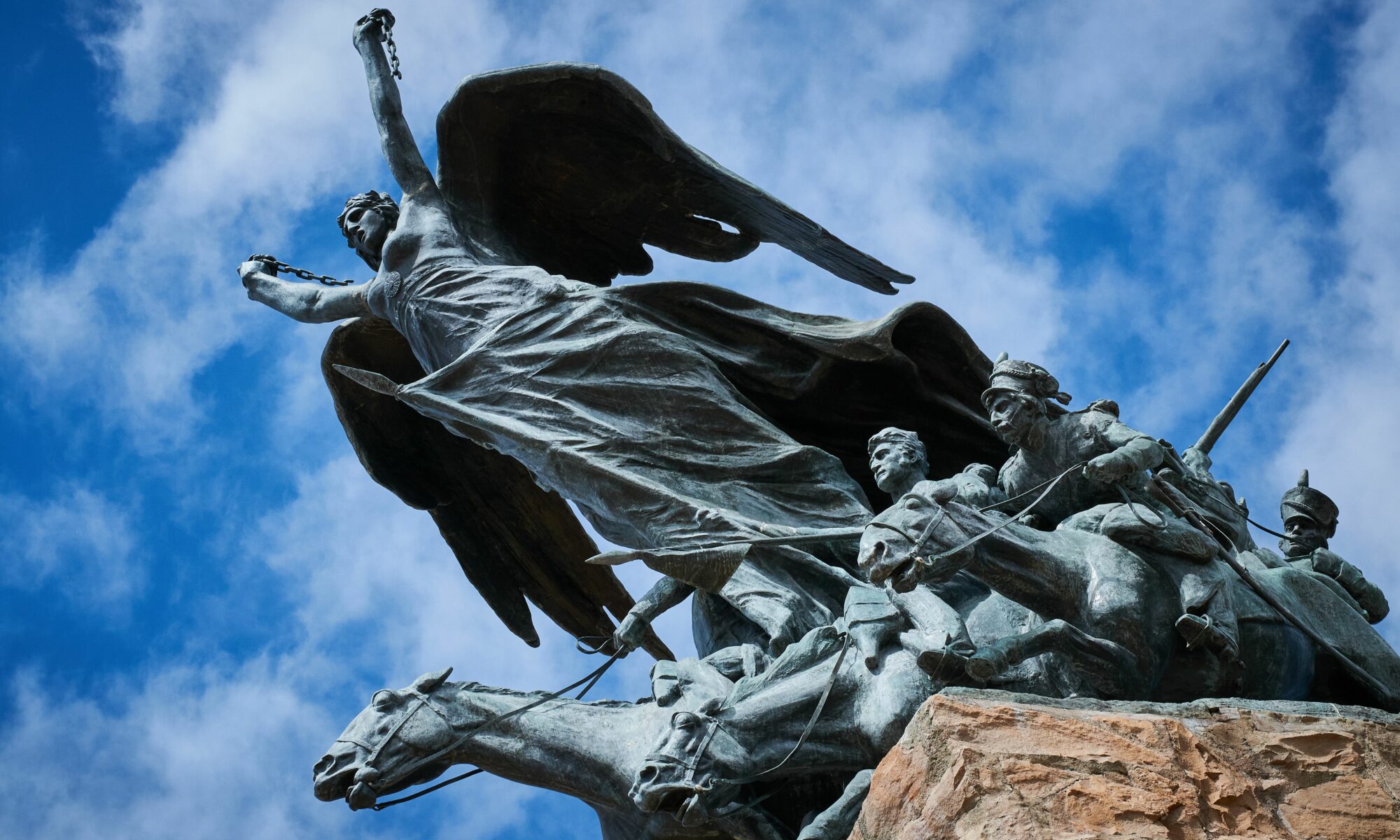
UNSEEN FORCES

2 Corinthians 10:4-18

Sermon starts at 24:52

THE BATTLEFIELD

There are a lot of things going on that we can’t see. Remember when Elisha and his servant were surrounded by enemies? The servant was afraid, but Elisha prayed, “Lord, I pray, open his eyes that he may see” (2 Kings 6:17). When his eyes were opened, he saw the mountain full of horses and chariots of fire all around Elisha. There were more with them than they could see physically.

This unseen world affects you on the way to church and on Sunday morning when you get up. You’re trying to get everything done so you can arrive with a big smile, but frustration is building. Finally, you get everybody dressed and run out the door, only to remember you forgot something. The commander is saying, “Good, good. It’s working.”

Sometimes the enemy drops bombs of discouragement on us. Other times, there is protection we don’t even know about. There may be a shield around us or a hedge of thorns Satan cannot get through. Now imagine you’ve made it to church and settled into your seat. The service is beginning, and there is no telling what blessings God is ready to give you. The unseen world doesn’t want you to receive them.
Think about that unseen world at a church service. There is a command center with people radioing back and forth, tanks rolling up and down the aisles, planes overhead, and soldiers carrying grenades, machine guns, and bazookas. These are enemies coming against our lives and what God wants to give us. The commander is radioing back and forth, coming up with strategies.

He sends out distractions. Maybe you’re thinking about the roast at home or the bills coming due. Then there’s the cell phone. Sometimes there’s a real reason to check it, but it can also distract you from receiving what God has for you. Maybe a young person is worrying about a bully at school. There can be all kinds of distractions.
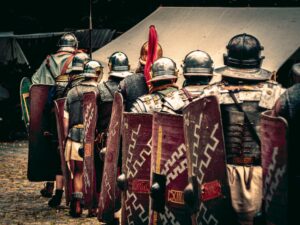
There is a critical time during the service when someone may feel conviction they’ve never felt before. It’s an opportunity to come forward and say, “I need to be saved today.” Somebody would be glad to show them from God’s Word that they can be saved. Meanwhile, the enemy shoots those bullets, saying, “You can’t be saved. You couldn’t be saved. You couldn’t do that.”

Think about an invitation. Someone new is looking around, trying to decide what to do. The commander is saying, “Get a couple of them to walk out. Let’s get some noise going in the back. Let’s get some people putting their coats on.” There is a battle taking place, and more is happening than what we see with our physical eyes.

IN TUNE WITH CHRIST

We need to remember that the weapons of our warfare are not carnal.

2 Corinthians 10:4–5 says, “For the weapons of our warfare are not carnal but mighty in God for pulling down strongholds, casting down arguments and every high thing that exalts itself against the knowledge of God, bringing every thought into captivity to the obedience of Christ.”

If this depended on human persuasion, we could orchestrate events to get the results we wanted. But it doesn’t. The Holy Spirit does the work within our lives. As we trust God, we find the protection and strength we need. Sometimes sin opens a breach in that protection. The enemy studies our weaknesses. He may not know our thoughts, but he has seen what we’ve said and done and knows our inclinations. He looks for a weak point and attacks there.

Sometimes we depend on our own strength. Then comes a letdown, and the fiery darts begin to get through. We need to depend on Christ. We don’t have tanks and flamethrowers to fight the devil and his minions.

James 4:7 tells us, “Resist the devil and he will flee from you.”

We also need to recognize that Christ is the powerful one and look to Him throughout the day.

Ephesians 6 talks about putting on the whole armor of God. The helmet of salvation and breastplate of righteousness represent spiritual equipping. When we leave church and go into the world, we still need God’s wisdom. We can order something and find out it isn’t the right size. We need to look to Christ for wisdom in the things we face.

Think about Peter’s vision in Acts 10. A great sheet came down from heaven, filled with animals, including unclean animals. God told Peter to rise, kill, and eat. Peter objected because he had never eaten anything unclean. God answered, “What God has cleansed you must not call common” (Acts 10:15).

Now imagine big sheets above us, billowing out and filled with blessings. There is joy, peace, and the ability to be long-suffering. All kinds of blessings are there in the unseen world, but distractions can keep us from recognizing them. We may have had conflicts before church. A husband and wife may have had a spat, but finally they get there and calm down. Then the service starts, and distractions come from every direction. We need to ask God to help us see what He has in store for us.

This isn’t all imaginary. Spiritual forces are at work. There are unseen things that come against us and unseen things that bring us victories. We don’t understand everything happening around us, but we need to pray and recognize that God is at work.

Think about George Müller, who started orphanages in England. He decided he would not ask people for money but would trust God to provide. That doesn’t mean every Christian must do things his way. He was following what he believed God had impressed on him. Müller prayed for money to build the orphanage, and the building was ready to open. But on the appointed opening day, no applications came in for any orphans. He realized he had prayed for the money, the building, and the workers, but he hadn’t prayed for the children. He prayed that evening, and the very next day the first application came in. Within a month, 42 children had applied, and 26 were already living there.

Sometimes the children gathered around the dinner table with no food. A well-known account tells of a baker who brought bread to the orphanage and a milkman whose cart broke down nearby, leading him to offer the milk to the children. This account is repeated in later biographies, though I would be careful about presenting every detail as something confirmed in Müller’s own records. God provided for the work in unexpected ways. For 24 years, Müller and his workers had been praying for the spiritual welfare of the children. Müller recorded that during one period, about 60 children came to believe in the Lord Jesus within a few days. We don’t understand everything happening in the unseen world, but we need to pray and trust God to work.

Paul and Silas were thrown into the inner prison at Philippi, bound in stocks and bonds. They couldn’t fight their way out, so at midnight they prayed and sang praises to God. An earthquake opened the prison doors and loosened their shackles. They could have escaped, but they stayed. The jailer thought the prisoners had escaped and was about to take his own life. Paul called out, “Do yourself no harm, for we are all here” (Acts 16:28).

The jailer asked, “Sirs, what must I do to be saved?” (Acts 16:30).

They answered, “Believe on the Lord Jesus Christ, and you will be saved, you and your household” (Acts 16:31).

God worked in a way they could not have orchestrated themselves.

DON’T COMPARE YOURSELVES AMONG YOURSELVES; GLORY ONLY IN CHRIST

Second Corinthians 10:12 says, *“For we dare not class ourselves or compare ourselves with those who commend themselves. But they, measuring themselves by themselves, and comparing themselves among themselves, are not wise.”

Paul had people opposing him in the Corinthian church. They compared themselves with one another and criticized Paul. He reminded them that such comparisons were not wise. Sometimes we see talented, hardworking people and feel terrible because we don’t measure up. Other times, we do well and become proud. Neither response is helpful. We are not wise to compare ourselves among ourselves.

Second Corinthians 10:17–18 says, “But he who glories, let him glory in the Lord. For not he who commends himself is approved, but whom the Lord commends.”

Jeremiah 9:23–24 reminds us not to glory in human wisdom, might, or riches, but to glory in understanding and knowing the Lord. We are not to be proud of how smart we are, how strong we are, or how much we have. What are we to glory in? The Lord. Whatever good we do, our abilities are gifts from God. Whatever blessings come our way, even when we pass them along to others, they still come from God. We glory in Him.

CONCLUSION

There is a lot going on in the unseen world. I have painted an imaginary picture, but spiritual forces really are at work.

First Peter 5:8 warns us that “your adversary the devil walks about like a roaring lion, seeking whom he may devour.”

Make sure you are in tune with Christ. Make sure your sins are confessed and you desire to serve Him in all you do. Don’t compare yourself with others, and glory only in Christ.

The Journey That Led to Athens

Acts 17:16-18

Acts 17:19-21

Acts 17:32-34

Matthew 11:28

Introduction

“Now while Paul waited for them at Athens, his spirit was provoked within him when he saw that the city was given over to idols. Therefore he reasoned in the synagogue with the Jews and with the Gentile worshipers, and in the marketplace daily with those who happened to be there. Then certain Epicurean and Stoic philosophers encountered him. Some said, ‘What does this babbler want to say?’ Others said, ‘He seems to be a proclaimer of foreign gods,’ because he preached to them Jesus and the resurrection.” (Acts 17:16–18)

“And they took him and brought him to the Areopagus, saying, ‘May we know what this new doctrine is of which you speak? For you are bringing some strange things to our ears. Therefore, we want to know what these things mean.’ For all the Athenians and the foreigners who were there spent their time in nothing else but either to tell or to hear some new thing.” (Acts 17:19–21)

Before we look at what happened in Athens,  consider the journey that brought Paul there.
It began in Philippi, where Paul and Silas were thrown into prison. At midnight they prayed and sang praises to God, and God miraculously opened the prison doors. The jailer came in, fearing the prisoners had escaped, and was about to take his own life rather than face the Roman authorities. But Paul called out, “Do yourself no harm, for we are all here.”


By the beginning of Acts  17, Paul had traveled to Thessalonica. As was his custom, he first went into the synagogue and preached to the Jewish people. Many believed. Others rejected the message, stirred up the crowd, and recruited troublemakers to form a mob. Paul’s life was in danger; his friends urged him to leave.


From there, Paul traveled to Berea. The Bible says the Bereans were more noble, or fair-minded, than those in Thessalonica. They listened carefully to Paul’s preaching and searched the Scriptures to see whether what he was saying was true. As a result, many believed.


Unfortunately, the opposition from Thessalonica followed Paul to Berea and stirred up another crowd. Once again, Paul’s friends urged him to leave for his own safety. They escorted him to Athens.


That is where we find Paul in this passage.

The Sadness, Idolatry, and Deception

Paul had asked Silas and Timothy to join him as quickly as possible, but they had not arrived yet. While waiting, Paul walked through Athens. The population of Athens was about 10,000 people, yet historians estimate there were around 30,000 idols in the city, three idols for every person.


As Paul walked through Athens and saw that the city was wholly given over to idolatry, it grieved his heart. He came from a very different background, growing up studying the Old Testament under Gamaliel, one of the most respected teachers of the Law in that day. Then everything changed.


Paul met Jesus on the road to Damascus.


Before that encounter, Paul had zealously opposed Christianity. These followers of Jesus seemed to contradict everything he had been taught. But after meeting Christ, Paul returned to the Scriptures and discovered this “new way”, he saw that Jesus was the Messiah promised throughout the Old Testament.


The same zeal Paul once used to oppose Christ became the zeal with which he preached that Jesus is Lord and God had proved it by raising Him from the dead.


But, behind the idolatry in the city was  the deception of Satan.


The King James Version says, **”**Ye men of Athens, I perceive that in all things ye are too superstitious.” Other translations say they were “very religious.” But, religion without God is nothing but superstition!


Paul had met the Savior. He knew there is no other name under Heaven given among men by which we must be saved. None of the names written on those thousands of idols could save anyone. There was only one way to heaven, and that way was Jesus Christ.


There is freedom of religion in the United States. God Himself gives people the freedom to love Him or reject Him. Likewise, our nation gives people the freedom to be Christians, atheists, or followers of other religions.


Sometimes people begin to think it doesn’t matter what you believe as long as you’re sincere. That is a lie from the pit of hell. It does matter what you believe!


The place where Paul spoke was the Areopagus. The Greek god associated with that place was Ares, while the Romans worshiped the same god under the name Mars. That is why it is often called Mars Hill. It was a place where people gathered to debate ideas and discuss philosophy.


Paul warned us to be careful that we are not “cheated through philosophy and empty deceit.” Satan is the father of lies, and one of his greatest tools is deception. He wants people to believe that any path is acceptable or truth doesn’t really matter.


There are many issues in our culture today where people, regardless of political party, fail to line up with God’s Word. This is not a political statement, nor is it an attack on individuals. But when our laws begin to approve what God’s Word says is wrong, we must stand with the Word of God.


Waves of philosophy and empty deceit continue to come against people today. Paul understood that personally because there was a time when he had been deceived, traveling in the wrong direction, sincerely believing he was doing God’s will, until he met Jesus Christ.

The Message That Could Have Brought Salvation

When some certain philosophers heard Paul preaching, they asked, “What is this babbler trying to say?” Others said, “He seems to be proclaiming foreign gods,“ because he was preaching Jesus and the resurrection.


They invited him to the Areopagus.


In one sense, that’s a good thing. People should be willing to listen and examine ideas honestly.
Paul accepted the invitation and began by saying, “I perceive that in every way you are very religious.” As he walked through Athens he  saw their many idols and beliefs. They were religious, but they did not know the true God.


Paul did not begin by attacking them. He began where they were and pointed them to the truth. He told them about the God who made the world and everything in it. This God does not dwell in temples made with hands, nor is He served by human hands as though He needed anything. He is the One who gives life and breath to all things.


The God they needed to know was not another idol among thousands. He was the Creator of all things. The message Paul preached could have brought salvation to every person who was willing to listen, repent, and believe. But sadly, not everyone was willing to hear the truth.

The Message That Did Bring Salvation to a Few

When Paul spoke of the resurrection of the dead they cut him short. When he spoke of the resurrection of the dead, some mocked him, while others said they would hear him again on the matter.

Yet the message did bring salvation to a few.

“When they heard of the resurrection of the dead, some mocked, while others said, ‘We will hear you again on this matter.’ So Paul departed from among them. However, some men joined him and believed, among them Dionysius the Areopagite, a woman named Damaris, and others with them.” (Acts 17:32–34)

Some people might have looked at Paul’s ministry in Athens and thought he had very little success. But God does not measure success the way we do.


The message brought salvation to Dionysius, Damaris, and others who believed. Much depends on the attitude of those who are listening. Will they be like the Bereans, searching the Scriptures to see whether these things are true? Or will they allow prejudice and preconceived ideas to keep them from hearing God’s Word?


For those who believed, the difference was that they listened. They believed the Word of God and came to the one true God through Jesus Christ.


You could have pointed to any of the idols that filled Athens and asked, “Did this god die for you?”


No!


Or ask, “Did this god die and rise again?”

No!


The gospel of Jesus Christ is different.


The good news is that although we have all sinned and come short of the glory of God, Jesus died on the cross for our sins. Because He is the Son of God, His sacrifice was sufficient for every person in every generation. His death was the complete payment for sin.


Yet not everyone is saved because not everyone accepts the gift He offers. Jesus offers salvation freely, but if someone rejects Him, there is nowhere else to turn. With Christ, there is hope. Without Christ, there is no hope.

Will You Reject the Deception of Satan and Accept Christ?

Are you fully trusting Him, or are the philosophies of this world, the pressures of society, and the lies of the enemy pulling you away from God?

The world pulls against us. What we hear in the media, what we see on television, and what our culture celebrates can cause people to question God and doubt His truth.

Friend, there is an answer. There is a way. 

Will you reject the lies of Satan and simply trust Jesus? Will you trust Him completely for your salvation? Have you truly placed your faith in Him?


If you have, praise God. But if you’re not sure you’ve ever really done that, then there is an invitation from Jesus Himself:

“Come unto Me, all you who labor and are heavy laden, and I will give you rest.” (Matthew 11:28)