Hello, everyone, welcome to day seven of the 28-day writing challenge. Well, today I got the next chapter, number 9, done for the book I am working on. I still have 2 questions to answer for that chapter. I need to do more research.
As I mentioned, you can, if you have your book blueprinted out, start on any chapter you want to, or even parts of a chapter.
Vlog for day 7
Research Codes
I’ve mentioned before that one of the ways that you can handle taming your research is to use certain codes. What I mean by that is you can research and research and research and never get started writing.
When you come to the point where you need to get started writing you will come to items that will need further research or that you may need to corroborate to make sure that your facts are right.
Tools to help with research
One of the ways of handling that is to put special symbols like three asterisks (***) together. Then when you do a search and replace you can just go to those areas where the *** and you can put in your new information.
I’ve been told that the letters T and K right next to each other don’t appear in any words in the English language. I haven’t really checked that out myself. But since I’ve tried it I’ve not run across any so it’s easy to just go and put in the “TK” in an area where you need to do some research.
Don’t stop right there when you’re on a roll, especially if you’re using this faster writing method. Just put in your code there. You may put XXX, or ***, or TK. Then when you’re ready, search for that and it will take you right to the spot where you need to put in the information.
If you do your research this way, it becomes very targeted and relevant research because you are searching for specific information instead of getting tons of information that you may not use.
So using research codes is a little tip for you as you’re doing this.
There’s Still Time
I’m still one day behind, but I think that I will get back on track. Am I the eternal optimist? I don’t know. If I’m the eternal optimist, that means that won’t ever get back on track. But as a realist, I probably will be back on track before the end of this week.
Still in this race!
How about you? How’s it going for you? Have you planned out your book? Have you figured out how long you want your book to be as a starting point? Have you figured out some chapter titles for your book? Have you gone further than that and perhaps made some outlines for your book? Have you come up with some headings to put in for your chapters?
Maybe you have gone through those blog posts that I recommended and followed the method that I’m using where you come up with 12 to 18 ideas. You then eliminate three of those ideas, put the ideas in the best order, then turn each idea into a statement or a question, and finally turn all of your statements into questions.
If you use that method, you will end up with anywhere from nine to 15 questions. Then, you need at least three “trigger words” to remind you of the answers to each of your questions. What happens if you don’t use all of your trigger words? Well, if it triggered you to be on a roll, it doesn’t matter. You’re the only one that knows what those trigger words were, anyway, although I do try to use them all.
Hello, everyone. This is day six of the 28-day writing challenge. I’m excited because today I wrote the first chapter of the book that I am currently working on! Well, my “first” chapter is actually chapter eight.
Video for day 6
If you do the blueprinting that we talked about before and you have it done for your whole book, you can really start on any chapter that you want to. In my case, I’m starting on chapter eight because I have the material for chapters one through seven from blog posts and a previous book that I had written. I’m taking some of the chapters out of that. I can do that because I own the copyright.
You can write a book!
So I got chapter eight done today, and also the blueprint for chapter nine. Now my goal was to get chapter 8 or chapters eight and nine written today and the blueprints for chapters nine and 10. So you can see I’m still about a day behind my personal goals, but I think that I will be able to catch up.
There is Time to Catch Up!
Since we are not including Saturdays and Sundays in the 28 days, I could catch up on the weekends when needed. But, even though I seem to be a day behind, I’m still excited about what I did accomplish.
The Timer Method
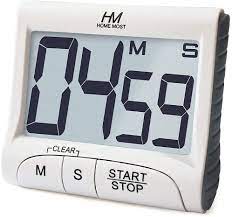
I was able to write this chapter today, in 45 minutes. You may ask, “How did you do that?” Well, I used my magic timer. I have two timers. One of them is bigger with red. That’s the one you see most of the time. I have a smaller one and I set it for five minutes, I look at my blueprint, and I answered the question, and I keep writing for five minutes. When the time’s up, I put an ellipsis (…) and I go to the next one.
The use of a timer can help you reach your goals.
If I get through more quickly, I just force myself to write and throw in more material. Sometimes it is surprising what does come to mind whenever that happens. Doing it that way is how I have the chapter done so quickly.
Now I have chapter nine blueprinted. I ended up with nine questions for chapter nine, so I’m very confident that I’ll be able to write chapter nine in 45 minutes also.
Using the timer is very motivating when you are trying to get your rough draft done. Now, this obviously is not the finished product. Later in the challenge, probably around day 10, I will show you how I will be working with that.
The Word-Count Method
Some of you are not wired that way, and you’ll have to do it a different way, You would have to figure out the number of words per day that you want to write. So the timer is the constant way I’m doing it and the number of words would be your constant way of doing it. If you use the word count method, your daily writing time may vary.
So I’m one day behind but I’m still ahead enough to be able to write the next chapter when it comes to blueprinting. So I’m excited about that.
Comparing the Two
I talked about the use of a timer and timed writing to get your chapter done as opposed to the number of words. Well, that is sort of like TV production. You can have taped TV production and you have live TV production. The advantage of the taped TV production is that you can edit and edit and edit and it can take forever. When you do live, it is what it is and when the program is over you are through and you get to go home.
Different writing styles can be like TV production
Now in some of those cases, there’s a lot of post-production work that goes on to improve the quality of the program. Whatever the time is, the time the program is over with and that’s why I liked the time of writing a rough draft.
Well, I hope this has been encouraging to you. I hope you’ve planned out your next step and maybe started figuring it out. Keep watching me as I go through my joys and maybe some struggles of getting this one done. Remember YOU CAN WRITE A BOOK!
Welcome to day five of our 28-day book writing challenge. I’m just checking in with you today. Some of you may be writing books along with me. Others of you may just be watching the journey as I go along.
Day 5 video
If you remember, the last time I talked to you, I was a little bit behind. So I want to tell you what’s going on now This is day five. Normally I would be writing my first chapter today, but what I did instead was some catching up.
Review
I had mentioned last time that I had done some research and some brainstorming. So I had the notes from some of the best-selling books, and also two pages of brainstorming. Then I went through and grouped similar items together.
Today’s Progress
Today what I did was go through and title those groups. As I was titling the groups I saw some that were quite similar. And so I came up with similar titles. And I saw that those would make suitable chapters for the rest of my book. So I did that.
My journey on the 28-day writing challenge.
Then I came around and I put the titles in the best order for me. List and where I came up with the names of the titles and then I had rearranged the order that I wanted and then one more change.
I started with chapter eight because I already had enough information for the first seven chapters. So when I started numbering these today, I numbered them chapters eight through chapter 16. The last change that I made was I had a title for chapter 16 called “Valuing Combats Fear and Shame” and then I had another chapter called “Valuing Makes Marriage Enjoyable.” I decided to switch those two so the last chapter would have a little more positive title.
Chapter Titles
Here are the chapter titles that I have come up with: Chapter 8: Valuing Produces Trust (I changed that to Relates to) Chapter 9: Valuing Encourages Both Husband and Wife Chapter 10: Valuing Recognizes Each Other’s Love Languages Chapter 11: Valuing Enhances Motivation Chapter 12: Valuing Can Affair-Proof Your Marriage Chapter 13: Valuing Combats Fear and Shame Chapter 14: Valuing Gives Children Security Chapter 15: Valuing Shows Gratitude Chapter 16: Valuing Makes Marriage Enjoyable
Chapter Plan
Next, I started working on the chapter writing plan for each of the chapters, and I came up with 12 ideas for chapter eight. If you studied those blog posts (www.randysblogs.com) that I talked about last time, which started on January 25, and they ended on March 2, the advice was to come up with anywhere from 12 to 18 ideas for your chapter.
So for Chapter 8, I came up with 12 ideas. Then I did what I was supposed to do and eliminated three. This just stimulates your brain and causes you to think and sometimes you can combine ideas. This also helps you get rid of some of the weaker ideas that you had.
So I eliminated three. In this case, I actually eliminated three of them, and I didn’t combine any. That left me with nine chapter ideas. Then, beside them I put numbers, arranging them in the best order for me and hopefully, for my readers.
Next, I turned those ideas into questions. For each question, I came up with three trigger words or phrases that would stimulate my brain into thinking about how to answer each of those questions.
Trigger Words and Phrases
Ask yourself questions to find ideas for your chapters
So here is the chapter outline writing plan for chapter eight “Valuing Relates to Trust”: 1. When does building trust start? As a child Before marriage Early in marriage 2. Why is feeling trusted important to men? Men don’t like to feel like failures Motivated Reciprocal 3. Why does trusting her husband build the wife’s security? Affair Alone Provision 4. How does seeing your spouse come through for you build trust? Brings closer Confidence Happiness 5. How does being on the same page about money relate to trust? Eliminates fear Being OK with some spending Giving 6. Why is risk-taking important and how will trust help? Sometimes your job involves risk-taking. Sometimes delving into ministry involves risk-taking. You can trust God 7. How does the trust that comes from being valued help when both of you are going to be in an area where you’re around the opposite sex? Relaxed Free Not jealous 8. How do policies about not being alone with members of the opposite sex build trust? No opportunity Stop before starting It can be difficult 9. Why will it take extra effort to restore trust if it has been broken in a marriage? Betrayal Again Fear
Free-Flow Writing
This is the secret to free-flow writing. I simply read the question, look at the trigger words, start the timer for five minutes and write as quickly as I can, answering those questions using those trigger words as prompts. If I get finished early, I’ll just force myself to keep writing.
Free-flow writing made easy
In the editing stage, I’ll probably get rid of some of that, but sometimes you get really good ideas when you force yourself to keep writing. If I fall short, I’ll just put an ellipsis (…) there and I will finish it later on in the editing stage. So that’s where we’re going with this.
I haven’t written chapter 8 yet, but I’m ready to go with that and I’m motivated. For tomorrow, I’m going to start coming up with 12 to 18 ideas for each of the other chapters and I’m going to start coming up with the writing plans for each chapter. But I especially want to do writing plans for chapters nine and ten. I if I do not write chapter eight tonight, then tomorrow my goal is to write chapter eight and chapter nine and if that happens, at that point, I will be caught up.
How’s it going for you? Leave some comments and let me know what you’re doing. What’s your idea for your book? How far are along are you getting? Do you have some questions?
Well, I hope you have a great day and until the next time in the 28-day writing challenge, I encourage you to remember YOU CAN WRITE A BOOK.
Welcome to day four of the 28-day book writing challenge. I have to confess that I did not get everything done that I wanted to get done today.
6-Figure Writing and Blog Post Suggestion
I want to tell you about something you can find on this blog, which is randycarney.comorrandysblogs.com Either one will get you to the same place. If you go to the top of the page, you will see a tab that says “Writing,” and there’s a down arrow beside it. If you hover over that you will see “Six-Figure Writing” pop up. If you click on that, it will take you to a page about a course that you can get that will give you weekly lessons for writing.
Now if you go back one page and click on “Writing” again, go to the bottom of the page and click the arrow to the right to go back to about 3 pages. The best way to find the posts I’m talking about is to look for the dates. I’m recommending the blog posts from January 25 through March 2.
Suggested reading
They all talk about how you can come up with a writing plan for your book. They will tell you how to have a plan for each chapter in your book. I did not get that far along yet this time. If you are doing this 28 days following along you’ll have to do as I do. You will either have to spend more time one day beyond just the writing to catch up and finish out to writing plan.
But you need to at least get the first chapter planned out. Then Monday, whenever you write that chapter, you’ll spend a little extra time getting chapters two and three at least planned out. Or if you just have extra time or you could spend an extra hour and knock out a bunch of those chapter plans. How to do is found on the blog posts from January 25 through March 2. I would encourage you to go and read all of those, take notes, and get a grasp of how this is going to work.
My Progress
I would like to have had my whole book blueprinted out from here. A blueprint is just a chapter writing plan. But on this 28-day challenge, the goal is to be able to work about 75 to 90 minutes a day. Some days it will take two hours, some days you might have to have some catch-up days.
The Schedule
A rundown of the schedule
We’re not writing 28 consecutive days in this challenge. We are doing four days as the first week, and then we will have four weeks of five days in the week. In other words, we started on Tuesday, January 18, 2022. So we have four days the first week. I’m not counting Saturdays and Sundays. So then the next four weeks we will have 20 days (5 days a week) so that will be 24 days, and then the last week will be another four days and that will finish up our 28 days. Not consecutive. I’ll be taking Sundays off and I’m going to be using Saturday for a catch-up and you can do that too. If you’re following along and you’re trying to do this, I pray that things are going well for you.
Heading into Day Four
So yesterday I talked about surveying the top 10 books in your category. I did the category of marriage in general and then I got more specific and I was surprised that when I typed in “valuing your spouse,” I did come up with several books. That phrase wasn’t in the title, but there were quite a few that were relevant to what I was talking about. So that was very good.
Brainstorming & Grouping Ideas
What I’m attempting to do today is brainstorm. I came up with the research from those books, I made notes from the table of contents, and I put in some quotes. Then after I did that, I came up with two pages of just brainstorming. So, we did the brainstorming,
Find a brainstorming method that works for you.
For today I was able to survey nine books. I wrote down chapter titles that stood out to me and a quote or two that were interesting to me. Then as I already mentioned, I brainstormed and filled up two more pages of ideas.
After that, I grouped those ideas using symbols (as I talked about on day 3), putting the ideas that were similar together putting a symbol by those ideas. I put a triangle by a number of ideas that were similar. Then I put a square beside a number of ideas that were similar, I put a checkmark by ideas that were similar. I did that until I got all the way through my list. I did have some that were outliers that didn’t fit into groups.
Chapter Length
So I could easily come up with ideas for about 10 more chapters. As I said I already had seven chapters. So this would make the book about 170 pages long. If I followed the strict way of doing this the older way of coming up with 10 pages per chapter.
However, as I’ve mentioned, the new idea is that books are shorter than they were in the past and that’s what is preferred by readers. So if I allow the chapters to be six to 10 pages long, the final result we can have somewhere between 130 and 170 pages.
That’s quite encouraging because I wondered if I would be able to even come up with the 100 or 120 that I was shooting for, to begin with.
Chapter Titles
Tomorrow I will be coming up with the chapter titles, and then a list of ideas that go with each chapter. (This is a summary of what you will find in those suggested blog posts) I will come up with keep putting ideas down until I get 12 to 18 ideas, then I will eliminate three. That means I will end up doing nine to 15 ideas to do the chapter plan.
Chapter ideas
I arrange those ideas in the best order and then turn each of those ideas into to a statement, a question, or a sentence. Having done that, then I go through the list again, and I make all of the ideas questions. Then I will write down three trigger words or ideas that will remind me of the answers to the question.
That takes some time, and it’s probably more than the allotted 75 to 90 minutes. But once it is done, it just makes everything else flow together so much more easily so I will be glad to spend the extra time either tomorrow or just extra minutes in the day.
Next Week
Next week is when I get started in earnest because I’m going to write my first new chapter. If you recall, I already have seven chapters, which I will tweak somewhat but I will be starting my first full chapter Monday.
That would possibly be the first chapter of your book.
So, I encourage you to go look at those six or seven blog posts from January 25. through March 2. That will show you what I’m attempting to do today and tomorrow and maybe for a few extra hours next week.
But once that outline, that plan is done then the rest of the time will just be spent spending 75 to 90 minutes on getting those things done. If I do shorter chapters it might just be 60 minutes on those. If you read the blog posts, you’ll better understand what I’m talking about.
Today’s Wrap-Up
Remember if you don’t already have a timer, I would highly recommend using one because it really works. It’s what worked for me; even in the brainstorming. You can spend hours and hours and be all over the place and the timer helps to narrow things down for you. You can always add things later. But it helped me to narrow things down.
I came up with 10 groups, although I haven’t named those groups yet, because they’re all very similar. Those could be for 10 more chapters as I look at it more closely. I may combine some of those and figure out which ones to eliminate.
That’s all for today. I hope you have a great day and remember: YOU CAN WRITE A BOOK!
Welcome to day three of the 28-day writing challenge. I’m glad you’re joining me today.
Yesterday we talked about the number of chapters that we’re trying to get our books to. In my case, I figured out that I had enough material I had already written for seven chapters. Now of course some of that will have to be tweaked, but I think I have that much material.
My goal is to do maybe five more chapters. Now that’s not set in stone. That will just bring me up to 125 pages. I can go as high as 200 pages if that’s what it takes to cover my topic. Right now, however, I’m looking for enough ideas for five more chapters.
Time Management
What I want to talk about on day three is time management. You typically want to set aside 75 to 90 minutes a day for working on your book. Some of you may be able to do this in 45 minutes or so, but that would probably be the exception. Generally speaking for me I’m thinking of 75 to 90 minutes every day. Of course, I do have to work around my other schedules.
Using a timer helps with time management.
How are we going to accomplish this? In my case, I’m going to use my magic kitchen timer. What that does is it forces us forces me not to edit too much as I’m going along. This is not the final product, so nobody’s going to see this but me. So the timer forces me not to edit too much as I’m going along. I can allow some typos and spelling errors as I’m doing this because it’s all going to be rearranged before I get to the final product. The timer creates an artificial deadline and we respond to deadlines.
What’s Next?
Today, I want to do two things. One was going to Amazon and researching books that are similar to the ones that we want to write. Now, I will say that since my book is about valuing your spouse, I suspect I may have a little challenge in finding other books on that topic. I am writing about the importance of valuing your spouse and the importance of having similar values. Now there’ll be a lot of books about values and Christian values. So I’ll be looking at some of those as I’m going along.
Brain dump time!
The second thing: I’m going to set my timer for 15 minutes as I do this. I don’t know how much research I’ll get done in the first 15 minutes, but I will set it again and I may do it as many as three times.
But after that the times up, I’m going to take a sheet of paper and fold it over, and I’m going to just start writing down ideas. I’ll have the timer set for this also, probably for 15 minutes. I’ll fill up that side, flip it over, and fill up that side. If I need more room, I’ll get another sheet of paper. fill up the page. So that’s how I do what I call a “brain dump.”
Getting Organized
It’s time to organize your list.
Then if you have time, you can see in the above video, I have several different symbols drawn. There’s a checkmark, left and right arrows, up and down arrows, triangles, squares, and circles. You’ll have this big list of random ideas and you will use a symbol to group similar ideas together. So all of those that are similar under the checkmarks, and then other ones that are similar under squares, and so on. That’s how we’re going to do that. We’re going to do the “brain dump” and then classify ideas into groups.
These steps will be very helpful because the groups may end up being our chapters.
So that’s the plan for what I’m going to do next. Then tomorrow, we will create the plan for the writing of our books. In my case, I may only need five days in the 28-day plan we actually have 20 days. So if I get my five days to work the way that I want to, then I will have some time to do more editing of the book than I would have in a normal 28 Day Challenge.
However, if you are planning on 20 chapters, then you’re probably going to fill up the 20 days if you are using 75 to 90 minutes a day.
So today I will research similar books, I’m going to do a brain dump and I’m going to group those ideas. I want to set my timer in 15-minute intervals. Tomorrow I’ll talk more about how you can create a plan that will cry out to you to write your book and you will look at that and it will just say, “Write me!”
I hope you had a good day today. Remember, YOU CAN WRITE A BOOK!
Welcome back to day two of the 28-day writing challenge! I’m inviting you to join me as I begin work on my next book. I wonder if you have decided to get a start on your own book during this challenge. Either way, you can do it with me or you can just watch as I go through the process. Let’s see how we will do with this 28-day writing challenge-Day 2 project.
This third one that I’m working on now is the “V” in the acronym “LOVING”. I had previously written a book called “The Loving Way to a Successful Marriage” and “LOVING” is an acrostic. So leaving is the L, overcoming is the O, and valuing is the V.
So I’m going to be talking about valuing each other and also having the same values in your marriage and what benefit there is to that.
Where to Find Content
Build a blueprint for your book
In my book “How to Write a Book in 28 Days or Less Without Stressing Yourself to Death”, I talked about one way of setting a blueprint for your book. I also talked about two other ways of writing a book and one of them has to do with speaking your book, so I have been speaking some blog posts. I may be able to do some more of those as I go along. I also talked about using previous things that a person had written.
So in my first book, I had four chapters in the section that had to do with valuing, so I have four chapters under my belt already. Then looking through the blog posts that I’ve done so far that relate to this, I think I can come up with three more chapters and just tweak those. I spoke those out to a general audience and applied those more generally. I’ll need to adjust them a bit to apply them more specifically. That gives me three more chapters. So now I have a total of seven chapters up to this point.
Book Length
What I’ve encouraged you to do is to figure out a target goal for your book. How many pages would you want it to be? I recommend your book be between 100 and 200 pages. It can be as low as 90 and go as high as 250 without stressing yourself to death. I decided to shoot for 125 for this book. Shorter books seem to be a trend. People like shorter books so they can get the information and be able to read them more quickly. Some of the longer books, people don’t finish. I hope this one, at 125 pages, would be one that could be finished easily. I decided to aim for 12 chapters.
Do Some Research
Searching for ideas
What have you come up with? What are you thinking about? If you’re trying to figure out the number of chapters, I suggest you look at similar books in your genre. Go to Amazon and look for the bestsellers in your category and see how many chapters and how many pages there are. I haven’t felt the need to do that this time, but if you’re new to writing, I strongly suggest you give this a try.
Also, looking at those titles and looking at the title chapters (we’ll talk more about that later) can be helpful, too.
Tomorrow I want to help you come up with the outline and blueprint for your book. We will do several sessions of brainstorming to be able to figure that out. In my case, I’m encouraged that I already have essentially seven chapters as a foundation. So I’m thinking that somewhere around five more chapters. That’s the encouraging thing for me: I will not need that full 28 days for the writing part of this particular book–if all goes well.
Information Gathering
I would like to do a survey for this book. I did that in the last book, “From Mountains to Molehills: Overcoming and Celebrating Your Differences in Marriage”, and it was very helpful. I would like to do that again for this book, so I’m going to go to Survey Monkey and create a survey. I would be glad for some of you to take that survey and of course, your results are anonymous.
Now the survey is not such a large sample as a scientific survey would be, but the advantage is that such a survey is very current and up to date. I’m looking forward to doing the survey.
Wrapping it Up
So by now, I would hope that you would have a working title. It doesn’t have to be set in stone. It doesn’t have to sound interesting to you. Just get to the title–what you’re writing about. My working title is “Valuing Your Spouse”. Of course, I want to come up with something more interesting before I finally publish this book, but that’s what I’m using for now.
So, come up with a working title. Figure out the number of pages you might be shooting for. If it looks like it’s less than 100 I would suggest you raise it up to 100 or 90 at the very least. If you have way over 250, you might want to consider cutting that down a little bit.
The number of chapters: generally a good number would be 10 to 20. Now it can be 21 or 22 or even up to 25. I guess you could go down as low as nine or eight. But, generally, you want somewhere between 10 and 20 chapters. If not you might want to rethink that a little bit.
Homework
Tomorrow we will go into that in more depth and I will give you more information about how you can do that. Also, I’ll tell you some of the things that I’m going to do with that too.
Homework
If you want to do something before tomorrow, go to those best-selling books on Amazon that relate to your topic, and look at all those on the first page. I usually go with the top 10. Just do some research and some looking around. When you do that, you may get some ideas for chapters of your own. Of course, you want to put those in your own words. The exact words in the exact order are copyrightable, but you can get some ideas. Ideas are not copyrightable. It is the expression of those ideas that you can claim copyright to.
That’s all for this session. I’ll see you next time. Remember: YOU CAN WRITE A BOOK!
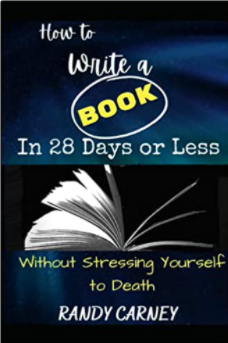
Welcome to day one of the 28-day writing challenge. I have written a book “How to Write a Book in 28 Days or Less Without Stressing Yourself to Death”. Now, I’m inviting you to either create your own book and see if we can get it done in 28 days or you can just follow along with me as I write my next book. I am excited to begin the 28-day writing challenge ~ Day 1.
My next book is going to be a follow-up of the book “From Mountains to Molehills: Overcoming and Celebrating Your Differences in Marriage”. Actually, there’s a precursor to that. It is a book called “The Loving Way to A Successful Marriage: Six Keys to Marital Bliss” That book is now out of print. That book is divided into six parts. After the first book, I decided I wanted to do a series of books on marriage. So what I’m doing is taking each part and making a book out of each part of this original book. That’s my plan, anyway.
In this 28-day writing challenge, the first three days are going to be kind of vague for you if you’re just starting out writing your book. These first three days can all kind of run together.
Build a Foundation
A solid book begins with a good foundation
Now, in my case, I have the foundation, around 40 pages. The first part of the original book was “Leaving: The Most Important Move You Can Make in Your Marriage”. Part two was “Overcoming: The Most Important Commitment You Can Make in Your Marriage”. That’s where the book “From Mountains to Molehills” came from.
The next section, part three, is “Valuing: The Most Important Attitude You Can Have in Your Marriage”. Leaving, overcoming, and valuing are the first three keys in the book “Six Keys to Marital Bliss”, and each one of those relates to the acronym “LOVING.” So, “The Loving Way to a Successful Marriage” will be the complete series..
So the first one is leaving, the second one is overcoming, and the third one is valuing each other. So I have valuing as the topic for part three (which is now book three).
My Process
Talking about valuing, what I wanted started on page 87 in the original book. In this, I talked about how men and women think. It’s one of my favorite things to talk about when I give speaking engagements. It also includes a section on having similar values. That section talks about how society’s thought patterns have influenced our marriages.
Part four is going to be “Intimacy: The Most Important Connection You Can Make in Your Marriage”. That will be the next book.
This book starts on page 87 and goes through page 120. So I have 37 pages as a foundation for my book. (I said 57 pages in the video. Ha! Math is not my strong point.)
In “How to Write a Book in 28 Days or Less” there are three different methods that are mentioned in writing that book. One of them is how to use your previous writing or previous blog posts and things like that. So in the book “The Loving Way to a Successful Marriage,” I have a section that’s related to valuing and that’s the foundation for my next book.
I have several blog posts that I’ve done in relation to that topic and I have also preached two or three sermons that would relate. Now the sermons are of course related to a wider audience than just married couples but I’m going to take those blog posts and hone them down more specifically to the idea of marriage.
You can write a book.
So that’s how I’m starting. What you need to do in these first three days is to figure out a working title for your book. This does not have to be the final title, but your idea, your topic, your working title. Are you going to be pulling together things that you have done before or are you going to start from scratch? Another thing that we need to figure out is how long do we want our book to be? I recommend anywhere from 100 to 200 pages.
Since I already have 37 pages, I need at least 60 more pages. (Again, I am having to adjust the math from what I said in the video. That would be six or seven chapters if I were to write 10-page chapters. That’s how I’m getting started.
First Steps
What you need to do is come up with your working idea. Do you already have an idea of major divisions that would be chapters for your book? If you do then you are in good shape. If not, then you need to come up with what you think would be the chapters that you would have in your book.
So, the challenge today and tomorrow is to come up with ideas for anywhere from five to 20 chapters you would want to create for your book. If you’re doing fiction, then again you would want to figure out how many chapters you would want. You would probably want at least 20 chapters for your fiction book. So figure that out.
That’s how I’m getting started. . Have a great day. Remember, YOU CAN WRITE A BOOK!
I’m so glad you’ve joined me. Today, I’m talking about writing fiction: five reasons why. In the video below, I mention four reasons, but you’ll discover that there is a bonus reason at the end!
The First Reason Why You Should Start Writing Fiction Is That You Can Exercise Your Creativity
Well, one of the first reasons for writing fiction has to do with the fact that you can exercise your creativity. Now whenever you are doing nonfiction, of course you can exercise creativity somewhat. But you can do it even more whenever you’re doing fiction. So you can exercise your creativity.
Sometimes in nonfiction, I recommend that you put in some fictional items to illustrate your point. Or you could possibly have made up examples of what you’re talking about. So, the first thing is that you can exercise your creativity.
The Second Reason Why You Should Start Writing Fiction Is That You Will Enjoy Your Writing
The second thing is that you can enjoy your writing even more. Now I have to confess I do enjoy nonfiction writing, but you can enjoy it even more whenever you are creating a story. It’s fun to create stories. You can create your stories, and, as I said, you can put some of those fiction examples in with your nonfiction writing. Then, you’ll have double enjoyment, especially if your nonfiction writing is something that you are passionate about. When you add your stories to your nonfiction, it’s even more enjoyable.
The Third Reason Why You Should Start Writing Fiction Is That You Can Start with Short Projects as Well as Long Ones
The third reason is that you don’t have to write “War and Peace” right out of the gate. You can write shorter versions of articles. There’s even a genre for that in fiction: The short story. It is a long-established genre of fiction writing. So you can you can do something shorter. You don’t have to be writing a very, very long novel, just out of the gate.
The Fourth Reason Why You Should Start Writing Fiction Is That You Write an Endless Number of Projects
Another reason to start writing fiction is that you have endless possibilities with it. Whenever you do a lot of writing in nonfiction areas, it will be an area where you may be branded in that particular area, or something that you know a whole lot about, so you end up writing all about that. However, eventually you reach the limits of your knowledge about what you have started talking about. You can break it down further and you can have different steps whenever you’re doing it, and sometimes you can explain things in a different way.
But whenever you’re writing fiction, the possibilities are endless. You can just write story after story. You can create new characters. You can have new settings. You can just write write, write write, write a lot of fiction!
The Fifth Reason Why You Should Start Writing Fiction Is That All You Need Is an Idea in Order to Start
Finally, the fifth reason to start writing fiction is that all you need to get started is an idea. Now, in your nonfiction writing, you have to actually know the particular steps to do something or you have to know the description of whatever it is that you’re talking about.
But in fiction writing, all you have to have is an idea. Of course, if you are going to talk about how certain detectives work, or maybe how the police would work, you’re either going to have to read a lot and be really familiar with how things actually work, or you may have to do some research in those areas. But even at that, you can start your story and continue your research. Once the research is done, you can go in and edit.
So, those are some reasons to start writing fiction. 1. You can exercise your creativity. 2. You will enjoy writing even more. 3. You can start with short writing and short stories and you might even be able to sell some of those to magazines. 4. The possibilities are endless. 5. All you have to have to start is an idea.
Today I’m talking about writing a fiction novel. Well, you’d ask “Aren’t most novels fiction?” I guess that is true; however, you do have a genre of historical fiction, which includes elements of nonfiction history. Here, we will discuss “Writing the Fiction Novel — Four Things to Think About.”
Walking with Randy videos can be seen on Facebook, YouTube, and Rumble
I. Think of Your Characters
First of all, think about your characters. You are certainly going to have a main character. Your readers are going to be spending a lot of time with that character, so it should be someone you and your readers want to spend some time with. Also, as I mentioned in the earlier post (read it here), I think you should also give your character at least one flaw; something they struggle with to make it a little more interesting. (I mean, after all, Superman has his kryptonite, does he not?)
Cast of characters
Then you can think about your other characters. They don’t necessarily have to be the kind that you would want to spend a lot of time with. In fact, if you can write a character that kind of makes you mad, that would be all right too. Your character should have personalities in contrast to one another.
II. Think of Your Stories
Next, think of your stories. Many novels have plots and subplots, or a main story and then a secondary story. If you decide to have a main story and a secondary story, you can flip back and forth between those two. At some point, the stories will probably intersect. So think about your main story and your secondary story.
Talking about the stories within the story: In the main story, you actually have two stories going on with that. You have the external story, which are the events that are taking place, Previously, I’ve written about how to start with a character’s real life, then he goes on a downward slope, hits rock bottom, or at least comes to a point of definite decision. It may be a point of no return. Then he starts on an upward slope, seeking his victory. There are obstacles along the way on the upward slope. Then finally there is victory and you tie it all together at the end. That is the outward story of your main story.
But there is also the inward story, and that is the emotional part that a person cannot see. It is where you will tell or show how the character feels as he or she faces those struggles.
Stories matter
So you have the external story, internal story and then you may have a main story and a secondary story, or maybe even some more smaller stories. At some point, your main story and your secondary story will intersect.
Even if you don’t have a secondary story, you still have stories within the main story. Because you have the outer story and the inner story, dealing with the events and the struggles the character faces.
III. Think of the Need to Get Something to Edit
Then think of the need to get something down. Think of the need to get the rough draft done. One of the ways to do that is to write quickly. I have just written a book called “How to Write a Book in 28 Days or Less Without Stressing Yourself to Death.” When I say “your book”, in this case, I am defining the word, “book” as having a rough draft and your first round of editing done. In my book, I explain some techniques on how to do that.
Basically, write in five to 10-minute segments, and write as quickly as you can. (Have your story planned out where you can do that.) Think of the need of getting the rough draft done. Why? Because you can’t edit something unless you have something to edit.
I’ve talked about three things to think about so far: Think about your characters, think about your stories, and think about the need to get the rough draft done quickly and then we move on to the need to edit.
Rough draft and editing are crucial steps.
IV. Think of the Need to Edit
Now, you need to go through and do your self-edit first. As you’re doing that, I would suggest that, if possible, you find places to insert more humor if you haven’t already. Go through and sprinkle more interest factors throughout. Go through and eliminate unnecessary words. Read and see where it is bogging down. Then maybe even add more cliffhangers to your story. Once you go through and edit yourself, it should be ready for a professional edit. You should have at least two rounds of professional edits.
There you go! You’re ready to have your novel ready to be published.
I’m happy to say that when the Kindle version of the book came out it hit the bestseller list on the first day of the launch! I encourage you to go check it out.
It has been good to be with you and I want you to remember, “You can write a book.“
Hello, everyone. I hope you’ve had a great Thanksgiving. Today I’m talking about creative writing fiction: eight steps to a good story.
Walking with Randy video
Character Traits
The first step to a good story is to give your main character all kinds of good traits. A little trick to spice things up a little bit and make the story more believable or more challenging is to give your main character a flaw. (Even Superman has his kryptonite.) It could be a habit that he has or something he’s trying to overcome or something that frustrates him or her.
Even Superman has his kryptonite.
John was in a cave and it was really dark. He could hardly see his hand in front of his face. He fumbled around in his pockets, hoping they would not hear him. He didn’t hear anything. He found a match and he struck it. They didn’t know that he had a match. John knew that match would soon run out but he also knew that there was a branch with some leaves on it. He had seen it when he went into the cave. So he ran over and grabbed the branch and lit the leaves. They flamed up but he was worried about when the leaves were going to die out. But they finally went down and the wood caught on fire. Now he had a torch and moved around trying to find his way out of the cave.
Real Life/Exciting Trouble
You may want to start your story with the character’s regular life. Or, you also may want to start at a very exciting time or low point or a place of really exciting trouble. Then after that, you would come into the main character’s regular life You could possibly do that in a “flashback” sort of way
The Downward Slide
Next, you start on a downward slide. Things start to slow down or things get worse. Things could start heading toward a problem. So you start on the downward slide. There are some obstacles along the way.
Rock Bottom
Rock Bottom
Then the next step is that the character comes to rock bottom. It may be what some would call the point of no return. So you start with the character’s everyday life, you have the downward slope and then the character hits rock bottom.
The Turnaround/Hope
Well, then you have the turnaround where there is hope.
John felt a little breeze coming toward him, so he made his way with his torch to a curve. As he stepped around the corner he could see what he thought was a little light in the distance, so he made his way toward that light. Now he had hope, and he was progressing toward that hope. However, not too far in his path, he found where the wall of the cave had fallen down.
So we had an obstacle to overcome. Now, this is the next step. So far, we have the first one which was characters. The second one was everyday life and exciting trouble. The third one was a downward slide. The fourth one was rock bottom. The fifth one was a turnaround and hope.
Upward Climb/Overcoming Obstacles
Now we are on the upward climb, and you keep climbing.
So in the case of John, let’s say he found a few more obstacles, but he overcame all of them and got out of the cave. Then he was on the upward slope. He wasn’t completely rescued yet. his captors may have come back and tried to find him. He didn’t know where he was. But, he found a house nearby and knocked on the door. The reaction of the people inside seemed a little bit suspicious to him. He decided that they were in league with his captors, so he quickly ran away. Soon, he got to another house. There he got a phone and was able to contact a friend who called the police. Then, before he knew it, he heard the sirens coming.
Victory
There is victory! The police showed up the bad guys were captured and we have the victory.
Tie Up Loose Ends
This step is towards the end as you want to tie up all the loose ends. If you’re writing a mystery or something like that, you will probably put some distractors out there that will lead people down the wrong path, and they will be surprised when they get to the end. Here’s where you can explain those distractors and tie up any loose ends.
In Summary
Well, I hope this is helpful to you. Creative writing fiction: eight steps to a good story. Here they are again: 1. Develop your characters and give that main character flaw or flaws 2. Describe everyday life and the exciting beginning 3. Go down the downward slope 4. Hit rock bottom 5. Turnaround and hope 6. The upward climb 7. More obstacles to be overcome 7. Victory 8. Tie up the loose ends.
I hope this will be helpful to you if you decide to write fiction. Even if you’re writing nonfiction, which is what I’m doing right now, you can still throw in some fiction stories (Like my story about John in the cave) to spice up your nonfiction. I hope you have enjoyed this.