
I haven’t been quite as active with these posts lately as I’ve taken a break and done a little writing myself. But I’m getting back into this where I talk about writing, speaking, marketing, and marriage.
Today I’m again talking about writing. Specifically, some bold solutions for stress free writing.
Lily Needed a Stress-Free Writing Experience
Lily was frustrated. She had been writing on her novel for a month.
Then her friend Alex called and asked her how her writing was going.
Lily expressed her frustration at not making as much progress as she had hoped.
Alex said, “Well, why don’t you take a break?” Like many of us would, she replied, “I don’t have time to take a break.” Alex answered, “I don’t mean take a break for a week, maybe just an hour or so. Just take a little break. Clear your mind, relax, and come back and start writing again.”
Lily Needed a Stress-Free Writing Experience
Lily was doubtful if that would work, but after they hung up, she took his advice and she went out to a nearby park.
She started walking around and looking at nature and enjoying the sights and sounds.
After that much needed break she went back to her house feeling very rejuvenated, and she started writing. Then she wrote more and more, and it was hours before she finished.
Lily’s story reminds us of the need for solutions to stress-free writing. So here are six simple solutions for stress-free writing.
Writing is A Process
First of all, understand that writing is a process. It’s not just something where the perfect product comes out right away.
When you do this, you will be editing, and you will be perfecting the process.
Some of us are what we call a frustrated perfectionist. This is something that I have to deal with, but I have been able to learn how to do it. In other videos, I’ve talked about how sometimes I will just set a timer and start typing away. The timer forces me to get my thoughts down and move on instead of writing the same sentence over three times.
Just keep going. Later, as I look at what I wrote, I find out that many times that first sentence wasn’t so bad.
Writing is a process.
I might find things to shorten and tighten and things to eliminate and reword but perfectionism can keep you from getting anything done and will take a long time.
You need to realize that it is a process, and you will be able to edit after you write.
My favorite quote is “You can’t edit unless you have something to edit.”
Realize that writing is a process that there is improvement with practice. The more you write, the better you get. Then once you produce one book, you will be able to produce another one.
The second book will be easier than the first provided you do quickly enough that you don’t have to learn everything all over again. But you improve with practice.
Start With A Plan
The second tip for stress-free writing is to start with a plan.
Jot down ideas of what you want to write about. Then you can create an outline or you can create a mind map.
If you’re not familiar with a mind map, that’s where you start with a blank sheet of paper and in the very center of it, you write down your main topic or your working title and you draw a circle around it. Then radiating out from that circle. take other ideas that come to mind and place them in little cartoon speech balloons.
A mind map can help with stress-free writing.
So you can write your first point into your balloon, and then you’ll have related ideas that will be subject points.
It’s just the main idea in the center and then you have some of the main ideas related to the main ideas coming out from the center.
Each one of those will be within a circle and then you will have related circles that come off of each of those main ideas. That will be your mind map, and then you can turn that into an outline.
Then when you get ready to write, you can use whichever one you prefer.
Eliminate Distractions
The third tip for stress-free writing is to eliminate distractions.
Get rid of distractions.
Get in a room by yourself. Turn off your social media access. Turn off the ringer to your phone and anything else that might distract you.
Then go ahead with your writing.
Take Breaks
The fourth tip for stress-free writing is to take breaks
I like writing in five-minute to twenty-minute writing segments. Sometimes I can go 50 minutes at a time, but I don’t recommend going much more than that at one time without taking a break.
Be sure to take writing breaks.
Many people find that writing for 20 or 25 minutes and then taking a five-minute break turns out to be good for them. But be sure to take breaks just like Lily did in our story at the beginning.
Write in Small Chunks
Another helpful tip for stress-free writing is to write in small chunks. Don’t think about the overwhelming totality of your project, just figure out the little parts.
Take it a small amount at a time.
Just think about small chunks and write that.
Also. you do not have to write in order of your outline. You can jump around. That’s one of the great things about composing.
When you are writing, find what interests you at the moment and focus on that part of your project.
That will “prime the pump” for you and then you can go to other sections that are necessary, but maybe not as interesting to you.
But write in small chunks.
Use Software
The sixth tip for six simple solutions for stress-free writing is to use software.
You can use dictation software if you are comfortable with that. That’s one idea for using software.
Using speech to text software can help with stress-free writing.
Another one is to speak your book or do it in a video like the one above. Then you can take the audio and put it into transcription software where it will transcribe many of the words that you spoke. (Speech to text) Of course you will have to clean that up and you will have to edit it to turn spoken speech into written speech but doing that can be very helpful.
In fact, many of the blog posts that you see on my site at Randy’s blogs.com are first composed orally in videos just like the one in this post. After that, my team and I come together and produce the written blog posts.
Then there is editing software like Grammarly, which will help you with your grammar, your sentence structure and things like that.
There’s another one I am not as familiar with, but I’ve heard of it. It’s called Hemingway editor. You might want to check that out.
At the very least, use the spellcheck, check and grammar check that is on your word processing programs. Most of those word processing programs today do have that capability.
So, there you are: six simple solutions for stress-free writing.
Hello. I hope you are doing well. Today I will give you some tips on writing a book for the first time.
Welcome to another blog post. My posts discuss writing, marketing, marriage, and coaching.
Are you interested in venturing into the world of book writing? Look no further! As a published author, I will give you several tips to help you if you’re an aspiring author.
Tips on Writing a Book for the First Time
Choose a Topic for Your First Book
Of course, a topic is the basic building block of any book. Eventually, you’ll need to come up with a title, but for now, all you need is the topic you want to write about.
Tips on writing a book for the first time include choosing chapter ideas.
Chapter Ideas
Next, you’ll want to come up with a list of chapter ideas for your first book. Using the process of brainstorming, ideally, you will come up with 12-20 possible chapters.
What do you do if you happen to get stuck?
If you’re having problems coming up with a list of ideas, think about some steps to get from one place to another.
If you’re writing a nonfiction book, you may have some steps to get from a problem to a solution. Each of those steps could be a chapter.
Another way of looking at it is you can get from pain to pleasure and your chapters would be the steps for doing that.
Decide what steps will get your readers to the solution.
Some people would picture that as being on one side of a stream with a series of stepping stones to get across. The stepping stones would be the steps to the solution.
This may not formulate your entire book, but these steps are usually anywhere from 7 to 12 steps to get from a problem to a solution or from pain to pleasure.
If you’re writing fiction, you want steps to get from a conflict to a resolution.
Review Your Notes
After you have the steps figured out, go back and look at your first brainstorming notes and see if there are some things that don’t fit in with a particular step. Then just add them in wherever you want.
Research Your Topic
Once you have that done, you have a good start, especially if you’re writing a nonfiction book.
To have a good nonfiction book, you need to survey other books on your topic.
Research the topic of your first book.
Go to Amazon and search for books on your topic. Look at the table of contents. You may find some things that you have left out of your original list. Be sure to look at several different books to be sure that you have a broad view of the topic in question.
If so, add them in. You want to cover the topic thoroughly.
The next step in tips on writing a book for the first time will show you how everything starts to fall into place.
Make a Plan
Once you have your list of chapter titles, it’s time to come up with a plan.
You should schedule one to three days per chapter. I like doing a chapter a day. If you do a chapter a day, working Monday through Friday, you can have the rough draft of your book completed in 4 weeks.
You’ll need to invest 75-90 minutes a day while working on that rough draft.
If you choose to only work 20-25 minutes a day, each chapter will probably take you 3 days.
The standard chapter length is between 6 and 10 pages.
What do you think is one of the most important tips for writing a book for the first time?
Time Management
Time management is one of the most important tips for writing a book for the first time.
There are 2 different ways of handling time management.
The one I prefer is writing fast and furious for a specified amount of time. I like to do it in 5-minute bursts. Sometimes I do 6 minutes and sometimes I do 10.
With this method you write furiously, not stopping to edit.
When you do this, time becomes the constant, and the word count is the variable.
You will have a good book length by doing it this way.
Other people can not bear to write that way and save the editing for later. If you want to write and edit at the same time, (which bogs me down too much) you’ll have to set your daily goal as a word count goal.
Choose a method that works best for you.
In that case, the number of words will be the constant and the time will be the variable.
Either way will work. It just depends on what fits you best.
Put that into your plan.
If you write for 75-90 minutes a day or write 1,000 to 3.000 words a day, you can have the rough draft of your 200-page first book done in 20 days.
If you’re not writing that amount daily, it will take you 3 times as long to get your rough draft done. That’s still a good amount of time, though.
I hope that this has been helpful to you.
My book can help you with your first book.
For more writing tips, click here. The link will take you to the writing portion of my blog, where there are many posts on the topic.
How to Get through writer’s block: seven actions to overcome this malady.
Welcome to another blog post, where I talk about writing, speaking, coaching, marketing, and marriage. Today I’m speaking about writing again – specifically, how to get through writer’s block.
Well, if you want to get through writer’s block, just keep reading. I’ll give you some tips for some ways to overcome that.
Overview of Overcoming Writer’s Block
Look at your plan. Then, I will talk about writing a different section. Write two pages of a list of reasons. Ask yourself some questions. Set a timer. Do some free writing or fast writing on an unrelated topic. Take a break. (Just make sure your break is not days long.)
Look at Your Plan
So first of all, look at your plan. Is it just a word or two?
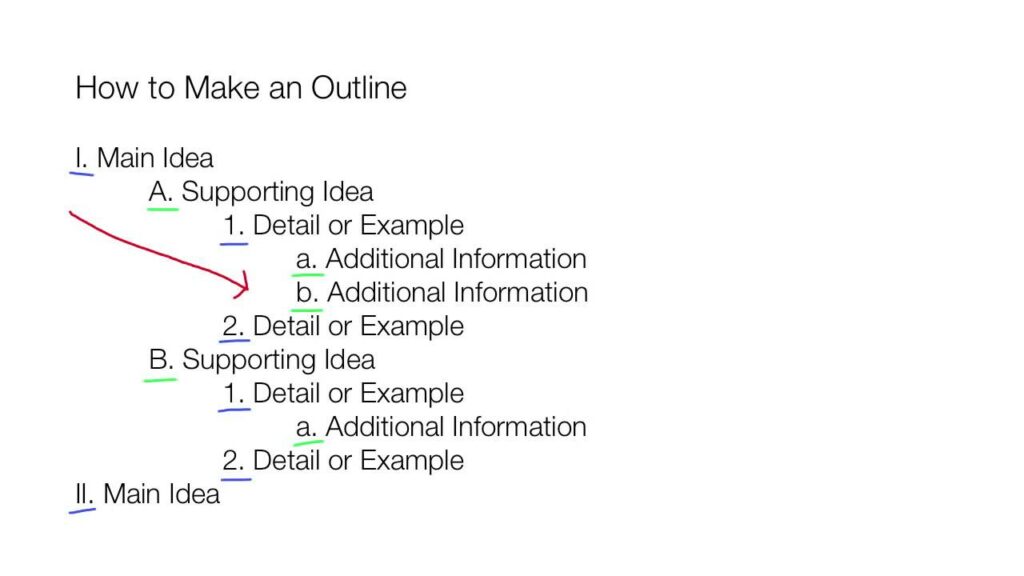
I actually am making an outline for myself. I don’t like to go beyond just the second level. In that case, you’d have your Roman numerals that would be your main points and then you would have just one below that which some people outline with letters others do Arabic numbers.
Reviewing your book plan can sometimes help you overcome writer’s block.
I do Arabic numbers because it’s easier to think of a list of numbers than it is a list of letters.
But anyway, some people go then beyond that with various points below the Roman numeral part and then the first part after that, and then a list of sub-points down below that, and then sub-points below the sub-points for you use whatever works for you what is best for you.
If you have writer’s block, you might not have gone down far enough. If you’re like me and you just like to go down maybe one level, this may be the time when you would want to go in and include some more sub-points.
I’ll give you some ways of doing that.
Go to a Different Part
Another idea for overcoming dreaded writer’s block is to just go to a different section of your book.
Now if you’re writing fiction, you might not have it planned out that far, but there are ways to do that with fiction, where you can derive any section that you want to write.
Sometimes that will help you if you’re not as excited about a certain chapter but you might be more excited about a later chapter.
Try going to a different part of your book.
Now if you’re doing nonfiction, if you plan your book out correctly, you should be able to go to a different chapter or a different section within a chapter, and sometimes that will help you.
You get the momentum going and then go back to the part that you had been dreading.
List Reasons Why is Your Project Important
The third one works especially well if you’re doing nonfiction. Get two pieces of scratch paper and just as quickly as you can, start listing a bunch of reasons why what you’re writing about is important.
Try to come up with two pages of reasons. Once you have come up with two pages of reasons, then you can go back through and pick out some of those and you’ll think, “Oh, I should have had those in my chapter anyway.”
Then go back through your chapters and put some of those ideas in.
Now you have also “primed the pump” by doing this.
Ask Yourself Questions
Here’s another very valuable one: simply ask yourself some questions.
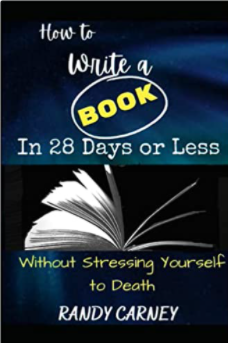
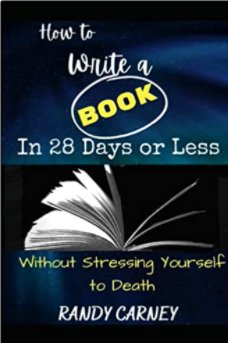
In my book “How to Write a Book in 28 Days or Less Without Stressing Yourself to Death,” I show you a way that you can plan out your whole book around just a list of questions.
Push through writer’s block by asking yourself questions.
If you have done it that way, then all you have to do is look at the question and answer the question. Then I talk about some ways that you can have some things that help you even get started with that.
If you are at a little bit of an impasse, then ask yourself a question. If you have written an outline or even if you just. phrases, go to those and turn them around and make them questions, and then just answer the questions.
Oftentimes this will get you going where you can get on through writer’s block.
Write Quickly
Now some of us have different personalities. You may be someone who is fine with going through and writing something and doing your editing later.
Maybe you are more comfortable with perfecting your paragraphs as you go along. That’s okay if that’s your personality unless it hinders you from getting your book done.
If that’s you, and that’s what’s causing your writer’s block, then consider just forcing yourself to go through it in a non-perfectionist way and just force yourself to write something.
Try fast writing.
You may say, “Well, it’s not any good.” Force yourself to go ahead and write anyway.
Then you can go back and edit it later.
Set a Timer
Something that can help you to force yourself to write is to set a timer. It can be just a simple kitchen timer.
Set your timer and then write just as quickly as you can. Just force yourself to write as quickly as you can. Then when the timer goes off you can go back and edit and polish what you wrote and get it just how you want it to be.
This technique, where you go write as quickly as you can for a certain amount of time, is called free writing.
Craftspeople like carpenters and plumbers do their tasks very, quickly, and very well because they have such experience doing it.
Write on A Different Topic
Another technique, which also involves fast writing, is to write about a topic that is unrelated to your main project. Just think of something to write about.
Think about using a timer to help get past writer’s block.
If you’re using the timer, I would recommend setting it for five minutes. Then sit and write for five minutes on an unrelated topic.
When you get through you may find that you have overcome writer’s block because now you have been able to write something.
Then you can go back to the original topic of your book or chapter. Then just go ahead and write some of that.
Take a Break
Or maybe it’s time to take a break. Oftentimes when you come back after the break, you’ll be ready to write.
I just want to caution you to make sure that break is not one or two days long.
But sometimes it’s good to take a break and then come back to your writing.
A short break can’t hurt.
I hope these tips have been helpful to you. If you’d like more tips, please go to www.randysblogs.com.
If you’re interested in having me speak at an event, go to www.randycarney.com. You’ll find some information there, along with a contact form for you to complete.
There is also the book I mentioned earlier “How to Write a Book in 28 Days or Less Without Stressing Yourself to Death.”
I hope you have a great day and a wonderful week.
I’ll talk to you again. This is Randy Carney reminding you, YOU CAN WRITE A BOOK!
Benefits of free-flow writing. Welcome to another blog, where I talk about writing, marriage, marketing, and coaching. Today I’m going to tell you about free-flow writing.
Vlog
What is Free-Flow Writing?
What is free-flow writing? Sometimes I talk about writing in the flow through free-flow writing.
You can get into free-flow writing which is to just start writing.
It’s sometimes said that during this process, you’re not thinking. Of course, that’s not really true. Your subconscious mind is always active and it’s guiding you as you do.
Free-flow writing will help with creativity.
Free-flow writing is writing without stressing or worrying about it. Then you do your editing later.
Sometimes this is accomplished by writing as quickly as you can.
Benefits of Free-Flow Writing
Meet Deadlines
If you do free writing in a certain way, it helps you to meet your deadlines. I recommend free-flow writing in conjunction with setting a timer. I
Ideal times are five minutes, six minutes, or 10 minutes. Just start writing and go with the flow.
Utilize a timer.
Of course, it’s best if you have a topic or a word that you use to prompt your writing. Then just go with the flow.
When you’re using a timer and doing, for example, a 5-minute snippet, the time will be your constant and the word count will be the variable.
So start your timer and begin with whatever word you have chosen for your idea and write as quickly as you can. Keep going until the timer goes off.
Then you can either put ellipses (…) there and straighten that out later or you can quickly tie the end together and get ready for the next timed session.
When you do this, you will meet your deadline of getting your rough draft done quickly and easily.
Sparks Creativity
Another benefit of free writing is that it sparks creativity. When you’re doing this free-flow writing, after a while, it’s kind of like you’re priming the pump and things begin to flow easily.
New ideas come and your creativity is sparked.
It’s Your Own Voice
A third benefit of free writing is that your writing is done in your own voice.
Now if you’re writing fiction, of course, a lot of that is going to be done in your own voice.
Free-flow writing allows you to use your own voice.
But when it comes to nonfiction writing, you often will have done a lot of research and you have gotten ideas and steps from other sources.
The free-flow writing will help you to express those ideas in your own voice which is a tremFreeendous benefit to you and to your readers once they’ve gotten to know you.
Helps to Overcome Writer’s Block
The fourth benefit of this free-flow writing is that helps you to overcome writer’s block.
When you have an idea or word that you’re going to start with and a timer you’re getting ready to start, you just take the word and you hit the start button on the timer, and start writing as quickly as you can about that word or that topic.
This can help overcome writer’s block.
Now, sometimes you might wind up writing fluff and it will be things that you will remove during the editing process.
But most of the time, you’ll surprise yourself with how well you are able to express something that you had put off.
Perfectionism
Dealing with perfectionism is a large problem that many, many writers have. We certainly want to have excellent writing, but we can perform that best through the editing process.
If you try to write and edit and make each little paragraph and sentence perfect the first time around, then there will be a lot of stress and you will likely not get through and probably have long days of writing.
It’s Fast!
But if you will do free-flow writing then you will have a rough draft done in just a short amount of time.
Depending on the writing project that you have set up if you are wanting to do a 10-page chapter for a 200-page book that has 20 chapters, then you’ll have 15 five-minute writing projects, which means 75 minutes of writing during a day. Done that way, you will get a chapter a day finished.
You can get your project done quickly.
That means that within 20 days, you will have the rough draft of your book!
Then you can go back and edit after that. If you’re a full-time writer, then you may do your free-flow writing first thing in the morning and then you’ll have the rest of the day to go back to your previous free-flow writing projects and polish them for as long and as much as you want.
If you’re like many of us who maybe have full-time jobs or other responsibilities, you may only have a half hour or an hour or an hour and a half a day to write.
In that case, it’s best to get the rough draft done and then have time slots in the days following to perfect the book.
For writing a nonfiction book, it’s a really good idea to write your basic book and after that, turn it into a fabulous book. B
Wrapup
Those are some of the benefits of free-flow writing.
The process helps you meet your deadlines, sparks your creativity, it’s in your own voice, and it helps avoid writer’s block to make writing fun and easy.
I recommend this process to you.
Find it on Amazon.
If you would like more writing tips like these, just click here to find my writing blog.
Five steps for stress-free writing. Welcome to my blog, where I talk about writing, speaking coaching, marketing and marriage. Today I’m talking about writing once again: Particularly, five steps for stress-free writing.
Vlog
Ralph thought he wanted to write a book, but he got really stressed when he started trying to actually do it.
He went about starting the first page but didn’t get very far. He didn’t do very well for a while. He was starting out with fiction. He thought he would try writing nonfiction, but he still had some problems getting started.
Ralph got stressed when he first started writing.
Then it came to him, “Why get stressed out?” So he figured out some ways to come up with stress-free writing.
Get Something Out There
I once had a job that required that I write a certain number of words a day. I started trying to do those number of words every day, but my problem was, I was trying to make them the perfect words, and it became very difficult.
Then something came back to me that I had learned before, “Just get something out there.”
So I started off each day with the idea of just getting something out there and I would just start writing. I already had a plan in mind: sort of an outline or at least a topic, but I would just take off and I will just write as quickly as I could.
Just write.
After about an hour and a half or so, I had my word count done for the day and it was wonderful.
Then I could go back and take out words, put in words, do some more research, and add in some more ideas. I was able to do some research for upcoming projects and go back and do some further editing on what I had done in the past.
That was the secret that, for me, became stress-free writing instead of stressful writing.
The Big Picture
First of all, get the big picture in mind.
What is it you’re wanting to write about? What is the big picture? What is the overall, overarching idea of what you want to write about?
Start your writing project with a big picture in mind.
Try to get the idea of what you’re going to write about down to one sentence. Don’t stress over that though. Just get a sentence or maybe a paragraph down for the general idea. Get the big picture.
Basic Plan
The second thing is to come up with a basic plan.
Once you have the big picture, try to divide that up into parts.
If it is a sequential thing, figure out the steps. Step one, step two, step three, and so on. Then you can hang your ideas on that.
How do you get your basic plan?
Sample mind map.
I have talked about mind mapping in the past. You can do a mind map or maybe come up with an outline.
An outline can just be a major point outline, or you might have a couple of sub-points.
Now if you’re really, really detailed and you are a person who writes off of really detailed outlines, go for it if it doesn’t stress you.
If you’re sort of a pantser: somebody who just likes to take off writing as the creative juices flow, the outline or plan doesn’t need to be as detailed.
Either way, just have the overall idea of what you’re writing about and have some major parts of what you’re writing about.
You can use your outline or your mind map for this.
Outline and/or Mind Map
I often find it helpful to do a mind map and then after that do an outline but try not to get too deep into the outline.
Sometimes both a mind map and an outline can be helpful.
Once you’ve done that, you have a basic plan.
Next, you need to write and you want that writing to be stress-free. There are two ways to make the actual writing part stress-free.
Free-Flow Writing
The first one I mentioned earlier-fast writing. I started doing that every day in the job I had as a staff writer.
The idea is to do free-flow writing.
Find your topic, and when you come to the part in your plan where you’re going to write about something in that part, instead of stressing about that, just take off and write. If you don’t know how to start, ask yourself a question about it and then start answering the question.
Free-flow writing can open up your mind.
Another way is to just pick a word and take that word and start writing with that.
Now granted, you may go back and change that first two or three sentences later, but just write.
Some people say don’t think. Of course, your mind actually will think, just don’t think to the point of stressing yourself. Remember you can always come back and change what you’re doing.
That’s one plan.
Talk Your Book
The other way is to record yourself. Talk your project out. You can do an audio or video recording on your phone.
After that, you can go back and you can transcribe the audio yourself or you can use a free transcription service on the internet.
You can speak your book.
The internet-based services usually have about 90% accuracy. You won’t be completely done if you do that but you can take it late and turn it into written words from your spoken speech.
You will want to revise it anyway when you’re going through the process.
So those are two ideas.
One is to just write as fast as you can. Just start and don’t worry about it. Just keep on going and know that you can add or subtract later. Just write. Get it down or speak it out. Later, you’ll be able to edit that.
So get the big picture and the basic plan. When you’re doing the actual writing, just do free writing or free speaking.
Scheduled Writing Time
When you have the basic plan, you need to set a schedule. There are two ways of handling your schedule.
You can decide on a time goal for the day.
In the case of writing a big project like a book, you’re going to write a certain amount every day; usually anywhere from 30 to 90 minutes during the day.
Try writing for specific amounts of time.
During that time, you can use free-flow writing or speaking.
Even within this method, there are even two ways of doing it. One way makes the time the variable and the number of words the goal. The other way of doing it is to make the number of words the goal and the time will be the variable.
Depending on your personality, one of these should work for you.
Time vs Word Count
If you’re going to utilize the word count method, you will just keep going until you get to the number of words that you have set as your goal. The time it takes you to reach that goal will probably vary from day to day.
I prefer the time constant with the word count being the variable. I have little projects, and many times I will just write for five minutes using free-flow writing. Then I’ll go to the next word or phrase or idea that I want to write about and again just write for five minutes.
If I’m through early I force myself to keep writing, although sometimes those are the things that will be thrown out later. If I don’t get through on time sometimes I just put an ellipsis (…) there so I know I have to finish that section later.
Now that will drive some of you crazy if you want to go with the word count method, but I found this to work very well for me.
So let’s go over the steps:
The first one is to get the big picture. The second one is to have a basic plan: What are the parts of what you’re talking about? The third one is to think about free-flow writing or speaking your words. The fourth one is to write on a schedule. Decide whether you’re going to write three times a week or daily. Most writers like to write daily and then either write for a specified period of time or toward a certain number of words.
Draft of Your Writing
Keep polishing as you go through.
The fifth step after you’ve done all of the above, come up with a draft of your writing. Keep making passes through your writing and change it as you go through.
If you go through it three times, you’ll find that you have gotten it into much better shape and closer to how you want it. Then just keep going over until it is how you want it or until your time deadline arrives.
Welcome to another blog post! How to write a book for Kindle is the subject of today. This is where I talk about writing, speaking, coaching, marketing, and marriage. This post another one about writing.
Vlog
My Suggestion
If you are a beginning author, you might want to consider writing a book for Kindle e-readers. Even if people don’t have a Kindle device, they can get a free Kindle reader for their phones.
So I suggest writing a book for Kindle when you’re getting your feet wet in the writing process.
Even if you’ve written other books like paperbacks and so forth and you still might want to get into e-books.
Write as Usual
My suggestion for writing a book for Kindle is to write it the way that you would a normal book, except you don’t need to worry about things like different kinds of fonts and formatting when you are initially producing the book.
Write as you normally do.
Without those concerns, you can focus on the content and get the book written the way that you want it to be written. So write it like you usually would.
Word Processing
I often use Microsoft Word, but lately, I have been using a program called Libre Office, It is a free open-source platform for word processing and is very similar to Microsoft Word.
You may be proficient in WordPerfect, and that’s fine, If you’re using a Mac computer you may be familiar with Pages.
Regardless, just use your regular word processing program as you write your book.
Get all your content and get it the way you want it. Get the content edited the way you want it.
How-To
First of all, go to Amazon and set up an account. After you’ve done that, go to Kindle Direct Publishing and set up an account there.
Now you’re ready to begin to write your book for Kindle.
As I said, you write it in a regular way, except you don’t worry as much about fancy fonts or certain types of formatting. When you have your account set up for Kindle, you will have the option to go into their platform and just copy and paste from your word processing document. right into certain sections of the Kindle form
Use whatever word processing program with which you are comfortable.
I would suggest that before you paste your book into the Kindle platform search online for a template for a Kindle book.
TCK Publishing

In the past, I have used a template for Kindle from TCK Publishing. Just follow his suggestions as to how to paste your document into his template.
He has some other suggestions as to how you can go about doing the different formatting, some fonts that you can use, and what size fonts you can use for headings and footers.
Table of Contents
In your Kindle book, you do not want page numbers. It just flows as one long document.
Research how to add a clickable table of contents to your Kindle book.
There are ways that you can have a clickable table of contents: you can do some research on that. Basically, you just have the name of the chapter, and you have a link that goes to the chapter. You can do some online research as to how to provide those types of links.
I think that in Microsoft or PCs, you might be able to make those types of table of contents and they may just come up as clickable.
For an Apple device, you might have to do some research to find out more about making your table of contents clickable.
Either way, I highly recommend you do that because many people really find that to be appealing in e-books.
Kindle Direct Publishing
Once you have the template filled out, then you can move over to Kindle Direct Publishing, and you can begin copying and pasting from your template into the respective places in Kindle. I think it is pretty self-explanatory as you go through the process.
So there you go. There’s how to write a book for Kindle.
Writing a book for Kindle is easy!
I hope you’ve enjoyed this and have found it helpful. If you’d like more tips like these, click here to find the rest of my writing blogs.
If you would like me to come and speak on one of several topics, click here and complete the contact form. I will be glad to discuss speaking at your event.
Hello everyone. This is Randy Carney again with another session of walking with Randy, where I talk about writing, speaking coaching marketing, and marriage. Today, I am talking about writing. I want to talk to you about writing a book for the first time – my story.
Vlog
In 2009, I decided that I wanted to write a book. I was encouraged by my wife to write something on the topic of marriage that would encourage husbands.
That was a compliment coming from my wife, and I was quite excited that she encouraged me to do that.
I’m not sure that she thought I would write a complete book but I got excited about the idea of doing it.
Now never having written a book like that before. I had to research a little bit and think about how I was going to go about doing it.
I did some research before I began writing my book.
I did have some previous writing experience that I’ve detailed in other videos and posts
Past Experience
One of those experiences was when I was in seminary. We had a major writing project. Some people call those things, dissertations or theses. My seminary was encouraging us to write them on a popular level, rather than on an academic level. Now that I think about it, that was a great thing, because it prepared the way for me to be able to write more popular books rather than just textbooks.
The project had to be 100 pages long. It was a little bit difficult for me to do. I kept writing on different slips of paper and things like that, but I finally got through it.
Then later, I had a job with Accelerated Christian Education, which was a major Christian textbook publishing company. Now their curriculum had courses that were divided into 12 units, and each of those would comprise a 325-page book, and then there were activities that were involved.
I was able to meet my goals by simply forcing myself to write 700 words first thing every morning. Then later in the day, I had time to research and then go back and change and revise what I had written that morning.
It ended up being great but it was a little bit difficult.
Helpful Tips from Others
When it came to writing a book on the topic of marriage I was reading about how some people wrote their books. There was an author named Rob Parnell who advised writing in the flow, and I enjoyed his materials very much. I’ve actually taken some of his writing courses.
For my first book, I got tips from other authors.
There was also a book by a man named Steve Manning that told you how to write using the technique of fast writing
Putting together what I learned while doing my major writing project, writing in the flow from Rob Parnell, and writing quickly, as advised by Steve Manning. I came up with a plan for a book and made the decision to go for it.
Much of the planning I did for the book I had learned from Steve Manning, as well as what I had done in my textbook writing.
The Plan
The plan for writing the whole book was 20 chapters, and each one of those chapters had a plan for five-minute writing projects. Each one of those chapters was planned in such a way that there would be 15 5-minute writing projects.
My plan was to write 15 minutes at a time.
So those 15 5-minute writing projects involved finding a total of 75 minutes every day to write. Using my technique of just getting the material done and using Steve Manning’s encouragement about fast writing I was able to write for those 75 minutes during the day.
They weren’t always consecutive. Sometimes they were, but sometimes they were snatches here or there. I could be sitting in a waiting room and get five minutes done.
That’s how I got started. I was determined to write for 75 minutes every day.
Now, like many of you, the best-laid plans of mice and men often go astray, so I didn’t always get that done every day. I do remember doing something with the book every day.
Most days I did write for 75 minutes in total.
No Matter What, Work on the Book!
During that time, I agreed to go on a mission trip to Mexico, so I was quite busy.
I was able to complete my book during a mission trip to Mexico.
We went into Mexico during the day and always crossed the border and spent the night in Texas. Late at night. I was able to write. The guys that I was with made sure that I had time by myself during that time which I was very grateful for. I finished the book while I was on that mission trip.
My Books
If you’re interested in my books, you can search Amazon for Randy Carney.
For more tips like these on writing, go to randysblogs.com and subscribe.
There are several ways to stay informed.
You can follow me on Facebook, and I also have a channel on YouTube and Rumble. Subscribe to one of those and you’ll never miss a thing!
If you’re interested in having me come to speak on the topics of some of my books or to speak on a topic of writing go to www.randycarney.com and fill out the form. I’ll be glad to come to speak at your event.
I hope you have a great day. I hope this has been helpful to you.
Max Lucado wrote a book called “God Came Near.” I haven’t read it but the title always intrigued me, so I will borrow it for today’s post. I’m thinking about the time that God became man to save the world.
I’m sure he must have been surprised At where this road had taken him ‘Cause never in a million lives Would he have dreamed of Bethlehem And standing at the manger He saw with his own eyes The message from the angel come alive And Joseph said Why me, I’m just a simple man of trade Why Him, with all the rulers in the world Why here, inside this stable filled with hay Why her, she’s just an ordinary girl Now I’m not one to second guess What angels have to say But this is such a strange way to save the world To think of how it could have been If Jesus had come as He deserved There would have been no Bethlehem No lowly shepherds at His birth But Joseph knew the reason Love had to reach so far And as he held the Savior in his arms He must have thought Why me, I’m just a simple man of trade Why Him, with all the rulers in the world Why here, inside this stable filled with hay Why her, she’s just an ordinary girl Now I’m not one to second guess What angels have to say But this is such a strange way to save the world
Joseph
In Matthew chapter one, we read that Joseph had learned of Mary’s pregnancy. They were not yet married but were engaged. In those days, that was as good as a marriage contract. He knew that he was not the child’s father. Because he was a just man, he planned to “put her away” (divorce) her privately. Then an angel appeared to him.
Gabriel the angel came to Joseph in a dream.
Matthew 1: 18-25 (MEV)
18 Now the birth of Jesus Christ happened this way: After His mother Mary was engaged to Joseph, before they came together, she was found with child by the Holy Spirit. 19 Then Joseph her husband, being a just man and not willing to make her a public example, had in mind to divorce her privately. 20 But while he thought on these things, the angel of the Lord appeared to him in a dream saying, “Joseph, son of David, do not be afraid to take Mary as your wife, for He who is conceived in her is of the Holy Spirit. 21 She will bear a Son, and you shall call His name JESUS, for He will save His people from their sins.” 22 Now all this occurred to fulfill what the Lord had spoken through the prophet, saying, 23 “A virgin shall be with child, and will bear a Son, and they shall call His name Immanuel,” which is interpreted, “God with us.” 24 Then Joseph, being awakened from sleep, did as the angel of the Lord had commanded him, and remained with his wife, 25 and did not know her until she had given birth to her firstborn Son. And he called His name JESUS.
Why?
God became man. Why? I want to look at some reasons why He did.
The first was to fulfill prophesy. The second was to show what God is like. The third was to communicate with us. The fourth was to identify with us in our struggles. Finally, to be the Lamb of God.
Fulfilling Prophesy
The passage above mentions one of those prophesies. Isaiah 7:14 14 Therefore the Lord Himself shall give you a sign: The virgin shall conceive, and bear a son, and shall call his name Immanuel
That is exactly what took place. That’s what Christmas is all about. The baby in the manger, born of a virgin, is that prophecy being fulfilled.
Jesus was born in Bethlehem, just as Micah had prophesied.
Micah prophesied that Jesus would be born in Bethlehem. (Micah 5:2)
There are about 300 other prophecies that proclaimed that God was going to become man. They were all fulfilled with the birth of Jesus Christ.
King David was told that his descendants would be on the throne forever. (2 Samuel 7:12-16, Isaiah 11:1, Jeremiah 23:5-6)
You may wonder who is on the throne today. You can research the genealogy of David down to the time of Jesus. (Matthew 1:2-16, Luke 3:23-38)
Jesus is the king. We don’t need anybody beyond that. He’s still the king and will be forever, sitting at the right hand of God.
Hebrews 1:8-9
8 But to the Son He says: “Your throne, O God, lasts forever and ever; a scepter of righteousness is the scepter of Your kingdom. 9 You have loved righteousness and hated wickedness, therefore God, Your God, has anointed You with the oil of gladness more than Your companions.”
It was prophesied that King David’s descendants would be on the throne forever. Jesus, through both Mary and Joseph, is the fulfillment of that prophecy.
What God is Like
Jesus was born to show the world what God is like.
Bing Crosby played a character named Hank Martin in a movie made in 1949 called “A Connecticut Yankee in King Arthur’s Court” which was based on a book written by Mark Twain.
The main character was somehow transported back in time to the medieval times of King Arthur. He was in trouble because he was dressed in clothing from another century and he thought he needed to do something spectacular to avoid being arrested.
Because people of that time believed in magic and sorcery, the character took his magnifying glass and concentrated the sun’s rays on a piece of paper and burst into flames. The king believed it was magic.
They looked at him differently then, and he was in the king’s good graces for a time.
Later, Hank challenged the king, saying he didn’t know his subjects as well as he thought. The pair began traveling around the country in disguise.
The people didn’t realize the king was among them.
On their travels, they overheard complaints about the king. Arthur wasn’t used to that and almost stuck the speaker before Hank reminded him that he wasn’t “the king” right then.
Farther along, they heard some positive comments about the king, and that pleased Arthur.
The king was in their midst, but they didn’t know it.
Jesus came to the earth and the King was present but many people didn’t realize it until after the resurrection.
Undercover Boss
You may have seen the show “Undercover Boss.” The owner of the company will go undercover and work as a regular employee and see how the actual employees perform. Sometimes they complain about the owner, but other times they are very diligent and hard-working.
Then near the end of the episode, the employees will hear that the owner is coming for a visit. They’re all sitting in a room and in walks the owner.
Some employees are nervous when they realize the things they said and to whom they were said. Others are just happy to see their coworker again and learn that he or she is the boss.
Sometimes the troublemakers get fired, other times, the boss gives them another chance or more training
Jesus came to show us what God is like.
John 14:8-11
8 Philip said to Him, “Lord, show us the Father, and that is sufficient for us.”9 Jesus said to him, “Have I been with you such a long time, and yet you have not known Me, Philip? He who has seen Me has seen the Father. So how can you say, ‘Show us the Father’? 10 Do you not believe that I am in the Father and the Father is in Me? The words that I say to you I do not speak on My own authority. But the Father who lives in Me does the works. 11 Believe Me that I am in the Father, and the Father is in Me. Or else believe Me on account of the works themselves.
If you’ve seen Jesus, you’ve seen the Father.
Communication with the World
Hebrews 1: 1-2
God, who at various times and in diverse ways spoke long ago to the fathers through the prophets, 2 has in these last days spoken to us by His Son, whom He has appointed heir of all things, and through whom He made the world.
In the Old Testament, God spoke through the prophets. In the days of the New Testament, God spoke to them, and us, through Jesus Christ His Son.
Paul Harvey once told the story of a man whose wife and children asked if he was attending church with them since it was Christmas.
The man declined. He usually just left it at a simple no, but he elaborated on his refusal this time.
“All this stuff about God becoming man, I just don’t quite get that.”
His family left to go to church and the man was sitting in his living room looking out the window. As he gazed outside, it began to snow. He saw some birds on the ground that appeared to be shivering from the cold.
They didn’t understand he was trying to help.
He went out to his shed, turned on the heater, and left the door open so the birds could go inside and be warmed.
He waited for the birds to go in, but they didn’t. He attempted to approach them but when he got close, they flitted away.
There was food on the ground so they didn’t go far, but they eluded him.
He tried to get near them again, but they flew away again.
He began talking to them, “I’m not going to hurt you. I’m just trying to help you.” He realized they didn’t understand what he was saying. How can I communicate with them? If only I were a bird.”
Then it hit him.
That’s why God came to this earth: So He could communicate with us.
Identify with the Struggles of the World
Another reason, I believe, that He came, is to identify with our struggles.
Hebrews 4: 14-16
14 Since then we have a great High Priest who has passed into the heavens, Jesus the Son of God, let us hold firmly to our confession. 15 For we do not have a High Priest who cannot sympathize with our weaknesses, but One who was in every sense tempted like we are, yet without sin. 16 Let us then come with confidence to the throne of grace, that we may obtain mercy and find grace to help in time of need.
He came to this earth to be able to identify with our struggles.
You may feel that God is so distant and doesn’t know what it’s like for you. But Jesus knows. He came and showed us that He knew what it’s like.
The story of the woman at the well shows His humanness. John 4:6 says He was “exhausted.” He knows what it’s like to be tired. He knew what it was like to be thirsty. (John 4:7-8, John 19:28)
Jesus knows the struggles the people of the world face.
He knows what it’s like to be rejected. He knows what it’s like to have physical pain. He knew what it was like to have to restrain His power. He could have called thousands of angels to deliver him in the Garden of Gethsemane, but He chose not to.
Lamb of God to Save the World
John 1:26-29
26 John (the Baptist) answered them, “I baptize with water, but One stands among you, whom you do not know. 27 This is He who comes after me, who is preferred before me, the strap of whose sandal I am not worthy to untie.” 28 These things took place in Bethany beyond the Jordan, where John was baptizing. 29 The next day John saw Jesus coming toward him and said, “Look, the Lamb of God, who takes away the sin of the world.
Jesus came to the earth to be the Lamb of God; a sacrifice for our sins.
Jesus became the sacrificial lamb for the world.
The Bible tells us that we have all sinned. (Romans 3:23) We’re all in the same boat. Some of us have what the world would consider “bigger” sins, but they’re all the same in God’s eyes. We have all sinned and come far short of God’s glory.
The Bible also tells us that the wages of sin is death. (Romans 6:23) That’s the bad news.
Each time you attend a funeral, you’re dealing with physical death The soul has separated from the body. Life has moved out and left behind is the shell.
There’s another kind of death called spiritual death. That’s when the soul is separated from God.
All have sinned and come short of the glory of God and the wages of sin is death.
We all have a death sentence on our heads.
But Jesus came, as John the Baptist pointed out, to be the Lamb of God.
His listeners knew the significance of the lamb because year after year there had been sacrifices of an unblemished lamb to atone for their sins.
God sent His Son to the earth to be the ultimate sacrifice: the Lamb of God.
Revelation 20:14-15
14 Then Death and Hades were cast into the lake of fire. This is the second death. 15 Anyone whose name was not found written in the Book of Life was cast into the lake of fire.
While everyone faces physical death, you don’t have to experience the second death.
Jesus came to be the Lamb of God and shed His blood as a sacrifice for our sins. He made it possible for everyone to be saved! That’s why He came.
Bringing Redemption to the World
That’s why God became man.
Why would Jesus leave Heaven, where they would do His bidding, and come to this earth to be rejected (Isaiah 53;3) and crucified?
Jesus was fully God but also fully man.
Many men have died, but none could take our place.
The divine son of God became human and physically died. But because of His deity, His death covers the sins of the world.
Jesus’ death on the cross covered the sin of the world.
That’s why you and I can be saved. He made it possible.
If you believe in your heart that God raised Him from the dead, you will be saved. (Romans 10:9)
We strongly, fully believe that Jesus died, rose again, the tomb was empty, and He was seen alive more than once after He was dead. It’s not a fairy tale.
Because He lives, we have the hope that we will live forever.
If you believe in your heart, you are very close. Romans 10:9 also says you need to confess with your mouth that He is Lord.
Have you done that? Do you know that you know that Jesus is your Lord?
If you don’t, today is the day. The Bible says today is the day of salvation (2 Corinthians 6:2)
John the Baptist said to prepare the way for the Lord. That directive has meaning in our own lives today.
Sermon video
Josh’s Questions
Josh was an older teenager and he was having a problem. He was trying to figure something out about life. He had three questions.
The first was: Who am I? The second was: Why am I here? The final question was: Where am I going?
He began trying to find the answers to those questions and decided he would do it in church. He began attending and was very faithful in the church. Later, he said, “I guess I was going to the wrong church. I went there every time the doors were open and I was 150% committed to the church, but I wasn’t getting my questions answered.”
He continued, “I actually felt worse in church than I did outside of church. I started trying to find the answers somewhere else. I decided I would find my answers through education.”
He graduated high school and went to university. Again, he was looking for the answers to those three questions. He discovered that most of the students at the university were worse off than he was. He then looked to the professors. He found no help there, either.
After a couple of years, he noticed a small group of people who seemed different. They were more confident and seemed to have more hope. Eventually one of them invited Josh to a meeting. The meeting turned out to be a Bible study. There were eight students and two professors in attendance.
Josh wasn’t interested in a Bible study.
Josh began noticing something different in their lives and it had an effect on him.
However, due to his previous experience with the church, he had become hardened in the areas of prayer and Bible study. He was resistant to the idea.
Finally, he told them that he noticed something different about them, and he wanted to know what made the difference.
Although he probably didn’t want to hear the answer, they told him anyway.
Jesus Christ made them different.
The first time he heard Jesus mentioned in the Bible study, he scoffed at it and pushed the notion away. He felt he had already tried to find the answer to life through religion and was unsuccessful.
He was forced to admit, though that something was going on in the lives of the people in the group.
Again he heard, “Jesus Christ is the answer.”
Not the institution of the church, but the person of Jesus.
A Challenge
One of the young ladies in the group challenged Josh. She said, “Why don’t you investigate and see if all of this is true? Was there really a historical person named Jesus? Find out if there were people who testified to unusual things being done. Find out if this man named Jesus really was crucified. Then there’s the claim of the resurrection, that He rose from the grave. Investigate that for yourself.”
Josh thought all those answers would be in the Bible, of course, so he started by checking that. He was very serious about the whole thing. He decided to try religion again. He planned to use the tools for investigating and verifying statements that he had learned.
Josh decided to do some research.
He took time off from his classes He went to some well-known libraries in Europe to investigate the claims in the Bible.
His heart had been hardened and needed to be prepared to get him to the point where he would even consider doing this.
Luke 3:1-6 (MEV)
1 In the fifteenth year of the reign of Caesar Tiberius, Pontius Pilate was governor of Judea, Herod was tetrarch of Galilee, his brother Philip was tetrarch of Iturea and the region of Traconitis, and Lysanias was the tetrarch of Abilene. 2 Annas and Caiaphas being the high priests, the word of God came to John the son of Zechariah in the wilderness. 3 He came into the region surrounding the Jordan, preaching the baptism of repentance for the remission of sins. 4 As it is written in the book of the words of Isaiah the prophet, saying: “The voice of one crying in the wilderness: ‘Prepare the way of the Lord; make His paths straight 5 Every valley shall be filled and every mountain and hill shall be brought low and the crooked shall be made straight and the rough ways shall be made smooth; 6 and all flesh shall see the salvation of God.’ ”
John the Baptist was quoting from the book of Isaiah, so let’s look at that passage.
Isaiah 40:1-8 (MEV)
1 Comfort, O comfort, My people, says your God. 2 Speak kindly to Jerusalem, and cry to her that her warfare has ended, that her iniquity has been pardoned, that she has received of the hand of the Lord double for all her sins. 3 The voice of him who cries out, “Prepare the way of the Lord in the wilderness, make straight in the desert a highway for our God 4 Let every valley be lifted up, and every mountain and hill be made low, and let the rough ground become a plain, and the rough places a plain; 5 then the glory of the Lord shall be revealed, and all flesh shall see it together, for the mouth of the Lord has spoken it.” 6 The voice said, “Cry out.” And he said, “What shall I cry out?” All flesh is grass, and all its loveliness is as the flower of the field. 7 The grass withers, the flower fades because the Spirit of the Lord blows upon it; surely the people are grass. 8 The grass withers, the flower fades, but the word of our God shall stand forever.
Prepare the Way
In the past, dignitaries would visit other cities or countries. If they were wealthy enough, the dignitaries would send people ahead of them to see the conditions of the roads. Would the journey be easy? How wide was the road? What type of vehicles would the road accommodate? The visitor may have been in a wagon or chariot or may have been carried on a litter.
The servants would go in advance to prepare the way for the dignitary.
They wanted the road to be smooth and the way to be good.
The Smoky Mountains in Tennessee have steep grades and sharp turns. The interstate that cuts through them has made those places smooth enough that you can safely take a curve at 70 miles per hour.
Some places along that route don’t go over the top of the mountain but around the side. There are guardrails along the edge of the road and signs warning you to watch for falling rocks. The construction crews have made the way easier.
John the Baptist was preparing the way for the Lord to come. Many years before, Isaiah had prophesied the events.
Four things were to take place to prepare the way for the Lord.
Mountain Brought Low
The first of those events was the mountain shall be brought low.
To prepare the way, the mountain must be brought low.
This did not mean that the ground and roads into Bethleham were going to be literally smoothed. I believe the passage means within our hearts. Our hearts are high, lifted up, and prideful.
In order to prepare the way for the Lord, the mountain of pride needs to be brought low and humility needs to be present. You have to be humble enough to be able to consider the Lord. You have to be careful about pride.
When I was in the 4th grade, the high school basketball coach came and got us 4th-grade boys and brought us to the gym. He gave us an orange spherical object and, to my surprise, the other boys knew what to do with it. I actually did know it was a basketball, but that was all I knew about the game. The other boys could dribble and I could not. I didn’t know the rules so I was feeling very self-conscious.
I was standing there with my hands in my pockets when the coach asked if I would like to learn how to play basketball. I said I would.
He responded, “The first thing you need to do is take your hands out of your pockets.”
That was my first basketball lesson.
Because I attended a small school I always made the team, but I was never one of the first 5. I wasn’t much of a star.
I needed to be brought low.
There was one time when my 4-H club was going to play a game against another 4-H club. Not everyone in the club was on the basketball team so there was a mixture of varying skill levels. The other club didn’t have enough people so they took some of our club members who did play basketball and put them on their team. It ended up: I was the star of the team that night!
I was so excited about that. A friend was planning on spending the night at my house that night. All the way home and for probably an hour after we got home, I talked about how excited I was and how great I had done.
He finally got tired of hearing it and he said, “Yeah, Randy, you were great. Just great.” That brought me back to Earth.
Sometimes we get lifted up with pride and it can stand in our way so we need to be brought low.
Filling the Valleys
On the opposite side of that are the valleys. You might not feel like you’re worth anything. You might be on the opposite end of the spectrum and feel like God could never love you or care for you. You feel like no one at all cares for you.
You feel like even your parents don’t care about you. You’re just picked on and bullied. You don’t have any friends.
That can happen sometimes and it can weigh on a person and cause them to be discouraged and feel low
By discovering your value to Christ, your valley can be filled
In order to receive Christ, you need to understand that you need to be lifted up and you are not worthless. How much value do you have?
You are of inestimable worth to God. He sent His Son to redeem you. He thought you were of such worth that He sent His Son from Heaven’s glory to this Earth where He was rejected and despised.
The religious leaders who were lifted up with pride arrested Jesus.
God loves you so much that He allowed that to happen. Jesus loves you so much that He allowed that to happen. Jesus allowed Himself to be arrested. He allowed his beard to be pulled out. He allowed people to spit on him.
He did that because He loves you and me. That’s how much He loves us.
You need to get to the point where you can understand that. When you do, then you’re preparing the way for the Lord to come into your life.
We are Like Flowers that Fade
If a young man wants to impress his young lady, he will sometimes bring her flowers. Usually, she really likes them. She’ll put them on the table. She likes to look at them. She likes to smell them. But after about a week the flowers become wilted and she will toss them in the trash.
Life fades like a flower.
The passage says our lives are like that. It’s here for a while and then it fades away. Like a flower that’s good for a while but it wilts and fades away.
Life is like a vapor. It’s here for a little while, then it vanishes away. (James 4:14) Imagine steam coming out of a tea kettle. You can see it for a bit but then it vanishes.
We need to realize that we are mortal and will not live forever and have time to prepare the way for the Lord within our lives. A lot of people act like they’re going to live forever and push away all thoughts of eternity.
To prepare the way for the Lord, we need to realize that we’re going to spend eternity somewhere.
We’re like the flower that’s here for a while and fades.
Make the Rough Places Smooth
Some places had rocks on the roads. To prepare for the arriving dignitary, the people would clear the rocks out of the way.
Sometimes the roads would be rocky and require clearing.
Depending on their circumstances, the dignitaries may build up the road some, shorten it, or find a different path altogether. They may find the landowner and ask for permission to pass through their property.
Usually, though, they would go on the established path. Their laborers would go ahead of them and clear the rocks to make the path smoother.
Years ago, I worked for Accelerated Christian Education. I was at their headquarters for about 3 years.
About halfway through my time there, the company decided to provide a retreat for any employee who wanted to attend. My family went. We did many different things during the retreat.
The company (ACE) owned property near Durango, Colorado, so that’s where we went for the retreat.
Because we were being paid while on the retreat, we had to be productive while we were there.
There was a dirt road on the property that had a lot of rocks. Many of them were good-sized. There were probably about 100 people working on this road. We went in front, and a wagon went behind us, and our job was to pick up rocks.
It was rough going for the wagon at first, but finally, we got enough picked up that it was able to go down the road pretty easily.
Take the rocks and move them out of the way. The high places are made lower – pride is brought lower to humility. The low places are made higher – worthlessness is brought up to the esteem that God has for us.
The Way Made Straight
The crooked thinking of the world needs to be straightened out. Sometimes we have to do some investigating as Josh did. There is some crooked thinking going on in our world today.
Crooked roads need to be straightened to prepare the way for the Lord.
Things that years ago would have been considered crazy are supposed to be accepted as normal today, and the world says that you’re supposed to say it’s normal whether you think it is or not.
You have to do something to straighten out the crookedness.
We need to come to a point where when God says something, it is so and if He says it’s not so, it’s not.
We need to recognize that and believe it.
Sometimes the rocks get in the way.
Josh’s Discoveries
Josh had thoughts, obstacles, or “rocks”, that were in his way. He was asked to investigate for himself and when he did, one by one, the rocks were removed.
First, he checked out the Bible. He found out that there were 40 different human authors (God is the author of it all {2 Timothy 3:16-17}) over 1400 years and it had an amazing unity to it. Today, you probably couldn’t find 40 different authors to agree on anything. In the Bible, there’s a unity of the message. There’s a scarlet thread of redemption from Genesis to Revelation.
Over and over again, the fact of the sinfulness of mankind and the need for redemption are portrayed.
Then comes the fact that Jesus Christ died and paid the penalty for our sins.
There’s amazing unity throughout the Book.
Josh had to admit that he could see that.
Then he looked at history and historical authors. For example, did Julius Ceasar really exist?
Josh’s research showed that Julius Ceasar did exist.
He found out how many ancient documents talked about Ceasar’s existence.
He found many texts that spoke about the New Testament.
He discovered that there was far more evidence for the truth of the Bible than there was for other books.
A rock was removed.
He found out that Jesus really was a historical person who lived. He learned that there were those who saw Him after He was reported dead, alive. He discovered that there were Roman soldiers who knew about death and said that Jesus definitely was dead. He also found out that the account of the spear being stuck into Jesus’ side and blood and water coming out was the truth, He learned that Jesus did truly die. He could not deny that.
Josh learned that the 12 disciples saw Jesus after He had been dead and their lives were changed. Before they had been filled with fear but they became bold after seeing the resurrected Jesus.
The time came when the authorities wanted them arrested, and a couple of times they were. While imprisoned, they sang! They couldn’t be stopped. Their lives were changed.
Josh couldn’t deny that.
Then he saw that throughout history, there were people who were willing to give their lives for the Gospel of Jesus Christ. He could not deny that.
One rock after another was being removed.
Josh’s last name is McDowell. Maybe you’ve heard of him or perhaps read some of his books. One such book is called “Evidence that Demands a Verdict.” It’s a collection of evidence so it’s hard to read straight through. However, it is a wonderful reference book. It’s a listing of all the things he discovered and put together. He’s also written a sequel called “More Evidence that Demands a Verdict.” If you’re looking for a good reference book, I would recommend these two.
Josh McDowell
The books contain the evidence that moved the rocks out of the path for Josh McDowell.
Lee Strobel
There is another man, named Lee, who lived in Chicago. He was a journalist. Like many people, he and his wife were enjoying life without any church attendance or background. They had similar ideas and lifestyles. However, their lives weren’t completely full. Lee’s wife, Leslie, had an emptiness inside, similar to what Josh had in his life.
So, she began to study the Bible with some friends. Next, she began attending church. As a result, her life began to change. She didn’t think she should do some of the things they had been doing before. Lee grew more and more frustrated.
He began to suspect that she was seeing another man. He discovered another Man of sorts, but it was difficult to fight against Him because Lee couldn’t see Him. Not to mention, He was a perfect man.
Lee was very angry and resentful.
This went on for a couple of years, and then Lee thought, “I’m an investigative reporter. I’m going to take my skills and use the same techniques and I’m going to refute this ‘Christian stuff’ for my wife.”
Lee and Leslie Strobel
His usual process was to interview experts in whatever field he was investigating. He approached this project the same way.
After each interview, his thought was the same: “I can’t argue against that one. What he said was right.”
Time after time, Lee came to the same conclusion.
The reporter’s name is Lee Strobel and he wrote the books “The Case for Christ,” “The Case for Faith,” and “The Case for Creation” plus many more.
Lee had all that resentment that was standing in the way. One by one, through those interviews, the rocks were removed so the path to the Lord could be clear.
Josh McDowell said after he came to the point where he had all the evidence, he was faced with evidence that demands a verdict. He was going to have to make a decision.
Josh and Lee both came to Christ.
Intellectually, he already knew it was all true but he still would not submit to Christ because of his pride. He would have to admit he had been wrong since he was in high school and those early years in college.
But he finally did, and then his heart was ripe for Christ to come in.
Lee Strobel knew these things were true and his heart was ripe for Christ to come in.
Prepare Your Heart
If you have something in your life that should not be there, I pray that the Lord would remove that obstacle for you. I pray that if there is some type of pride in your life that you would be brought low so you can consider other things. I pray that if you feel worthless, you will be lifted up and understand that God loves you. I pray that if you have a crooked road that something will come and help you see that it’s not right and you’ll be straightened out. As you understand more and more that the Word of God is the truth, it will help straighten out your thinking. Whatever rocks might be in the way, I pray that they would be removed.
Prepare the way for the Lord to enter your heart.
John the Baptist cried out, “Prepare the way of the Lord. Let the high be brought low, the low be brought up, the crooked places made straight, and the rough places made smooth.”
If you’ve never come to Christ, and today you’re at the place where your heart is ready, you can make a decision for Christ today. The way has been prepared and there’s nothing standing in your way. You can come to Him.