
THE GOD OF SECOND CHANCES

AND THE HEART OF HIS LAW

Deuteronomy 10:1-5 and 10:12-13

INTRODUCTION

Acts 1:8 says, “But you shall receive power when the Holy Spirit has come upon you; and you shall be witnesses to Me in Jerusalem, and in all Judea and Samaria, and to the end of the earth.”

In Acts 15, Mark was invited by his cousin Barnabas to go on a trip with him and Paul. Paul and Barnabas had planned this trip because they wanted people to experience the salvation that is in Christ.

In Acts chapter 2, Peter preached on Pentecost, and thousands of Jews came to profess faith in Jesus. Jesus came to His own, but many of His own did not accept Him. Yet there were people who were well-versed in Old Testament Scripture who were saying, “This is it. He is the Messiah.”

Peter later preached the good news of Jesus to the Gentiles. The Holy Spirit fell upon them just as He had with the Jews. They went out and shared the gospel, telling others that Jesus had come to this earth, that He is the Son of God, and that He lived a sinless life.

Do you know what it would take to get into Heaven by doing good works? Absolute perfection. Romans 3:23 says, “For all have sinned and fall short of the glory of God.” Though the wages of sin is death (Romans 6:23), Jesus still went to the cross.

He had been beaten mercilessly before He got there. As He carried the cross, He fell beneath its weight, and a man from the side of the road was tasked with carrying it the rest of the way. On that cross, Jesus died and paid the penalty for all sin.

After His death and resurrection, His followers went out into the world to share the gospel. That is exactly what Paul and Barnabas were doing when they planned their trip.

Barnabas wanted to take Mark, but Paul remembered that Mark had abandoned them on their first journey. When they planned to return and visit the churches they had started, Barnabas wanted to give Mark another opportunity, but Paul refused because he considered him unreliable. Barnabas believed Mark simply needed some help along the way.

The contention between them became so great that they could not agree. Paul went with Silas, while Barnabas took Mark and went another direction.

Whatever they should or should not have done, the result was that two groups of people went out to spread the gospel.

Even today, churches sometimes split over reasons that should never have caused division. But when tempers settle and people move past their hurt, they often continue serving the Lord, whether they return to their old church, find a new one, or start one themselves.

Churches are sometimes started out of contention. Yet if people truly repent of their sins and seek the Lord, He can come in and begin to work through them, and the gospel begins to go out from there.

That is exactly what happened with Paul and Barnabas.

GOD OFTEN GIVES SECOND CHANCES

Deuteronomy 10:1-5 says:

“At that time the Lord said to me, ‘Hew for yourself two tablets of stone like the first, and come up to Me on the mountains and make yourself an ark of wood. And I will write on the tablets the words that were on the first tablets, which you broke; and you shall put them in the ark.’”
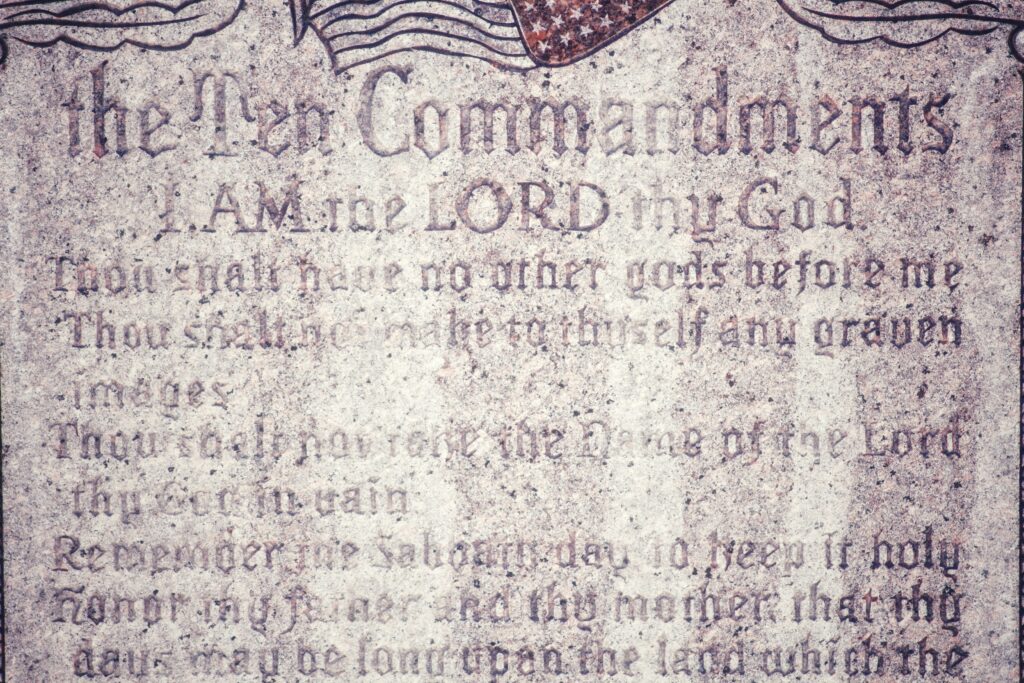
The Lord often gives second chances. The people had sinned against God while Moses was on the mountain. When he came down with the Ten Commandments and saw what they were doing, he was so angry that he broke the tablets.

But God gave them another chance.

Paul later wrote in 2 Timothy 4:11, “Get Mark and bring him with you, for he is useful to me for ministry.”

Mark had been at the center of the disagreement between Paul and Barnabas, but the relationship between Paul and Mark had been restored. Mark had proven himself faithful, and Paul now said he was useful to him for ministry.

There was a second chance.

Have you ever needed a second chance? Second chances are a wonderful thing.

That is what God was doing here in Deuteronomy chapter 10. The first generation had passed away. They were not allowed to enter the Promised Land. The only ones left from that generation were Joshua and Caleb, who had said, “Let’s take the Promised Land” when they first heard about it.

Now this next generation had the opportunity to enter it.

GOD GIVES THE HEART OF HIS LAW

Deuteronomy 10:12-13 is where we learn the heart of the law:

“And now, Israel, what does the Lord your God require of you, but to fear the Lord your God, to walk in all His ways and to love Him, to serve the Lord your God with all your heart and with all your soul, and to keep the commandments of the Lord and His statutes which I command you today for your good?”

In seminary, one of my professors came into class singing, “God is good!” Someone answered, “He answers prayer!” Someone else said, “He is coming again!” The answers continued until the professor said, “Let’s sing, ‘He gives us rules!’”

A lot of people do not appreciate being given rules. God, however, was gracious in giving us the Ten Commandments.

The Ten Commandments use the words, “thou shalt not.” Some might say that is too negative, but when God tells us what not to do, there is still so much else that we can do.

So yes, there are rules, and yes, it is good that God gives them to us. These verses ask one question: What does the Lord your God require of you?

First, we are told to fear the Lord our God. We often redefine that word by saying it means to have an awesome reverence toward God. I believe that is one way we can fear God, but I also believe there is another meaning. The Bible tells us to be afraid.

Matthew 10:28 says, “And do not fear those who kill the body but cannot kill the soul. But rather fear Him who is able to destroy both soul and body in hell.”

That verse tells us to fear God. Why?

God is love, and Jesus died for us. If you believe in Him and call upon Him for salvation, you do not have to fear God. But if you plan to shake your fist at God, you ought to be afraid.

Fear God. Do not rebel against God. You will not win. It may look like it for a while, but ultimately you will lose.

By fearing the Lord, we are to walk in all His ways and love Him with all our heart. Sometimes a child has such a loving parent that they want to emulate them. They want to please them.

That is what God wants us to do. We should want to walk with Him and please Him.

Good works will not get you into Heaven. You cannot do enough of them. You will fail somewhere along the way. But we do want to do good works because God loves us and we love Him. We want to please Him out of gratitude for what He has done for us.

Matthew 22:36-40 tells us that Jesus was asked, “What is the greatest commandment?”

His answer was similar to these verses in Deuteronomy: “You shall love the Lord your God with all your heart, with all your soul, and with all your mind.” He then added, “You shall love your neighbor as yourself.”

Everything in the law fits into those two categories: loving God and loving your neighbor as yourself.

HE DOES THIS FOR OUR GOOD

Deuteronomy 10:13 says to “keep the commandments of the Lord and His statutes which I command you today for your good.”

The laws God has given us are for our own good.

There is a stop sign coming into town that I used to complain about because I had never seen anyone come from the north when I was at that stop sign.

One morning, the police came up behind me with the lights flashing. The officer came to my window and said, “Sir, you know why I’m stopping you, right?”

Honestly, I did not have a clue.

Maybe all those years of griping about that stop sign caused me to subconsciously ride through it that morning. I told him I was hoping he would just give me a warning, and thankfully, that is exactly what he did. 

I am much more conscious now of stopping at the one coming into town.Laws are for our own good, especially the law of God.

John 6:28-29 says, “Then they said to Him, ‘What shall we do, that we may work the works of God?’ Jesus answered and said to them, ‘This is the work of God, that you believe in Him whom He sent.’”

You cannot live life with 100% perfection, but Jesus did. He died on the cross and became our sinless substitute. If you put your faith and trust in Him, you can claim the gift of eternal life.

The works that need to be done to get into Heaven were already done by Jesus Himself.

CONCLUSION

Jesus said in John 6 that the work of God is that you believe in Him whom He sent. Jesus is saying, “Believe in Me.”

You have probably done things that are irreversible. But if you believe in Jesus, you do the work of God. That is the good news that Paul, Barnabas, Mark, and Silas went out into the world to share.

The fact is, you must trust Him with all your heart and all that is within you.

Have you come to that point in your life? Do you believe that Jesus is the Savior of the world, that He died on the cross, and that His death was sufficient to pay the penalty for your sins? Have you yielded to Him and said, “Here I am, Lord. Please forgive me”?

If you haven’t, take a moment and call upon Him today. If you have wandered away from God and desire to come back, take time now and call upon Him today.


GOD HAS MANY PEOPLE IN THIS CITY (Acts 18)

“Do not be afraid, but speak, and do not keep silent; for I am with you, and no one will attack you to hurt you; for I have many people in this city.”
(Acts 18:9–10, NKJV)

THE UNDERDOG

Have you ever been the underdog? 

When watching sports, if you don’t know either team, you may not know much more than the rankings. 

Sometimes in the NCAA tournament, a lower-ranked team starts beating teams nobody expected them to beat. They call those Cinderella teams. Don’t you want to root for the underdog in those moments? It’s exciting to see them win.

That’s the situation we find the Apostle Paul in Acts 18. 

KEEP PREACHING

When Paul traveled, he often stayed for a short time to establish a church and then left once elders were appointed to care for it. He stayed longer in Corinth than usual, though.

Paul knew there was very real danger there as he had encountered before, being beaten and left for dead. But God told Paul he didn’t have to fear. He told him nobody would hurt him because He had many people in that city. He was telling Paul that there were people in the congregation he didn’t know about and people who, if they could hear the gospel, would come to Christ.

He always did as the Lord instructed, even if others were warning him against it. So he stayed in Corinth for a year and a half teaching the Word of God among them.

As a hospice chaplain, I often went to nursing homes. Sometimes while visiting someone, I just talked with them and provided comfort. Other times, I was able to share the gospel.

One time, the man I was supposed to see wasn’t in his room, so I went down to the common area. There were about six people there, and I found him sitting in his wheelchair. I spoke with him and asked about his church background. He told me he didn’t have one, but he listened as I talked about the Bible. I went over the verse in Romans that says, “For all have sinned and come short of the glory of God.” He said he knew that meant him and he believed it was true. I came to the part where it says the wages of sin is death. In other words, the penalty for sin is death. He nodded yes.

I said, “Whoever shall call upon the name of the Lord shall be saved.” And I asked him if he would like to do that. He said, “Yes.” I prayed a sample prayer and he prayed along with me. I then invited him to pray in his own words, and he accepted the Lord that day.

You see, he was sitting in that common area in his wheelchair that day waiting and ready to hear how to be saved.

Only God knows how many are in your city waiting for someone to tell them about Jesus.

The ones already active with Paul were part of the many in the city. But there were many who would come to accept Christ while Paul was there, and there were also those who were already believers that Paul had not met yet.

It’s kind of like what happened with Elijah on Mount Carmel. Elijah stood before the 450 prophets of Baal and challenged them to call on their god to send fire to their sacrifice. They cried out to Baal all morning, danced around the altar, and even cut themselves, but nothing happened. Elijah mocked them, suggesting their god was busy or asleep. But when Elijah called upon God for fire, He sent fire!

When Queen Jezebel heard what had happened, she threatened Elijah’s life. He fled into the wilderness and became discouraged, telling God that he was the only one left who was serving Him. But God told him he wasn’t alone. There were still 7,000 in Israel who had not bowed the knee to Baal.

Just like Elijah, Paul knew there were people who were serving God that he didn’t know about. God told Elijah there were 7,000 who had not bowed the knee to Baal, and He told Paul, “I have many people in this city.” Because Paul believed God’s promise, he stayed at Corinth longer than he stayed at most places.

KEEP MOVING

(Verses 18-23) So Paul still remained a good while. Then he took leave of the brethren and sailed for Syria, and Priscilla and Aquila were with him. He had his hair cut off at Cenchrea, for he had taken a vow. And he came to Ephesus, and left them there; but he himself entered the synagogue and reasoned with the Jews. When they asked him to stay a longer time with them, he did not consent, but took leave of them, saying, “I must by all means keep this coming feast in Jerusalem; but I will return again to you, God willing.” And he sailed from Ephesus.

And when he had landed at Caesarea, and gone up and greeted the church, he went down to Antioch. After he had spent some time there, he departed and went over the region of Galatia and Phrygia in order, strengthening all the disciples.

I want you to notice all the movements going on here. When God impresses upon us that it’s time to move, we need to move. If He impresses upon us to stay, we should stay. Difficulties happening around you are not always a reason to leave.

What matters is obeying what God has put on your heart, just as Paul did here.

There was a tribe in Africa that always believed there must be a creator just by looking at the sky. When someone came to teach them about evolution, the tribe just laughed!

But when a missionary, sent by God, visited this tribe, they asked him, “Are you the one that’s going to come with the words that help us understand the Creator of the universe?” He answered, “Yes.”

The tribe, who had never even seen a Bible, were captivated as the missionary spoke. He began in Genesis telling stories all the way to the New Testament, the life of Jesus, and then the crucifixion. It was so vivid in their minds that they began to weep! They were left in remorse waiting until morning when the missionary came to finish the story.

He told them how Jesus had risen from the dead, and the whole tribe got excited! As was their custom, they got up, jumping up and down on one foot and celebrated the risen King!

KEEP LEARNING

(Verses 24-26) Now a certain Jew named Apollos, born at Alexandria, an eloquent man and mighty in the Scriptures, came to Ephesus. This man had been instructed in the way of the Lord; and being fervent in spirit, he spoke and taught accurately the things of the Lord, though he knew only the baptism of John. So he began to speak boldly in the synagogue. When Aquila and Priscilla heard him, they took him aside and explained to him the way of God more accurately.

John the Baptist’s message was, “Repent, for the kingdom of Heaven is at hand.” Aquila and Priscilla explained to him, “you need to be preaching the death, burial, and resurrection of Jesus, as well as repentance.” He did not get upset when they corrected him. He received it and went on to help others greatly.

An older pastor went to a young seminary graduate with a doctorate degree with a question. He said, “I don’t understand the meaning of just one word in John 3:16, ‘For God so loved the world.’ It’s the word ‘so.’”

The young man looked up at his degree and it couldn’t help him answer the pastor.

As you go through life, the longer you live, the more you find out you don’t know. But you should keep learning. Get in the Scriptures and let the Word of God teach you new things. There is always something more to learn, even in the verses you think you know well.

CONCLUSION

When God tells you to do so, keep preaching. Keep teaching. Move when He tells you to move and stay when He tells you to stay.

Most of all, keep learning.

Have you at least learned that all have sinned and come short of the glory of God? And that the wages of sin is death, but the gift of God is eternal life through Christ Jesus!

If you repent of your sins, believe in Jesus, trust in Him, and call upon Him, He will bring you salvation.

If you haven’t done that, I would encourage you to come to Christ today.

Mighty Arrow

Psalm 127

Introduction

“Unless the Lord builds the house, They labor in vain who build it.”


Psalm 127 begins with a simple truth: if the Lord is not in what we are building, our labor is in vain. That applies to our homes, our families, our churches, and even our nation.

After the Revolutionary War, the American colonies had won their independence, but they still needed a government that could hold the new nation together. In 1787, delegates gathered in Philadelphia for the Constitutional Convention. They quickly found themselves divided over what that government should look like.

Benjamin Franklin, at 81 years old, rose during the disagreements and reminded the delegates how often they had prayed for God’s help during the struggle for independence. He said that the longer he lived, the more convinced he became that “God governs in the affairs of men.”

Franklin then referred to Psalm 127 and proposed that prayers asking for God’s help be held before the Convention’s daily business. His proposal was not adopted, but his words still pointed to an important truth.

Unless the Lord builds the house, we labor in vain.

We can work, plan, organize, and try to build everything ourselves, but ultimately our hope must be in the Lord.

Our Nation Needs Hope

Our nation needs hope. There are wars, economic concerns, natural disasters, uncertainty, and pressures facing young people that many of us never faced when we were their age. We can look around and find plenty of reasons to become discouraged.

But our hope is not ultimately in circumstances getting better. Our hope is in Jesus.

Years ago, I went through a time when I was deeply depressed. I could not even explain why I was so discouraged. I attended a conference where they taught different techniques and ideas, but those things were not really what helped me.

What helped me was hope.

Something about that experience reminded me that there was hope, and my outlook began to change. Maybe you have experienced that too. You were discouraged, and someone gave you a little encouragement. Maybe God sent a blessing at just the right moment that reminded you not to give up.

Hope can change things.

And Psalm 127 points us toward another source of hope.

“Behold, children are a heritage from the Lord, The fruit of the womb is a reward. Like arrows in the hand of a warrior, So are the children of one’s youth.”

Children Are Like Arrows

I have not had a great deal of success with bows and arrows.

When I was young, I bought a little plastic bow and arrow from a dime store. I was proud of it and took it to show my cousins. Within about thirty minutes, the bow was lying in the yard in two pieces with the string between them.

Later, at Boy Scout camp, we went to the archery range. They asked whether I wanted a light bow or a strong one. Looking at the target in the distance, I decided I needed the strong one.

That bow was so strong that my hand trembled trying to pull the string back. When I finally released the arrow, it did not come anywhere close to the target.

So I am probably not the person you want teaching an archery class.

But Psalm 127 tells us that children are like arrows in the hands of a warrior. An arrow has the ability to go beyond the person holding the bow. In the same way, our children and young people can go places, reach people, and accomplish things for the Lord that extend far beyond us.

Sometimes we say young people are the church of tomorrow. I hope they are.

But they can also be the church of today.

A Mighty Force

I learned something about young people being a mighty force when I was in high school.

Being a freshman was not exactly the most honored position in school. There were some seniors who had a habit of grabbing freshmen by the feet while they were sitting on the tall gym bleachers and pulling them down.

One day, two seniors came into the gym and did it to a freshman. The boy was left sitting there with tears in his eyes.

The seniors walked away laughing and sat farther down the bleachers.

Then something happened.

The basketballs stopped bouncing. A group of freshmen gathered together. The seniors were not paying much attention as that group moved toward them.

Instead of going after the smaller senior, they picked the biggest one.

There were suddenly hands everywhere. They grabbed his feet, pulled, and down he came.

As far as I know, they never did that to another freshman again.

There is strength when young people come together with a purpose.

Imagine what can happen when young people give that strength, energy, and willingness to the Lord.

Children Used by the Lord

When my own children were in high school, I knew people would eventually start asking them that question young people hear all the time: “What are you going to do when you get out of school?”

A lot of young people do not know yet.

I told mine, “Just tell them, ‘I’m going to serve the Lord.’”

At the time, I was partly giving them something to say when they did not know how to answer the question. But today I can praise God that all of them are serving the Lord.

That is what we should desire for our children.

I once had a friend named Ralph Rice who worked with young people at church camp. Years later, he and his wife were in a store when a young man approached him and asked, “Brother Rice, do you remember me?”

The boy had grown up.

He thanked Brother Rice for caring about him and loving him when he was young. Then he told him that he was now working in the church himself.

That is encouragement for every Sunday school teacher, youth worker, parent, grandparent, pastor, and church member who has ever wondered whether investing in a child really makes a difference.

Kids grow up.

You may not immediately see what God is doing through the time you spend teaching them, loving them, praying for them, and pointing them toward Christ. But those children are growing, and God can use them.

Our young people are not merely waiting for their turn to become part of the church. They are part of the church now.

So let’s pray for them. Let’s encourage them. Let’s teach them the Word of God and give them opportunities to serve.

And young people, if God is leading you to do something for Him, do it. You do not have to wait until you are older to serve the Lord.

You can be one of those mighty arrows in His hand.

Unless the Lord builds the house, we labor in vain. But when the Lord is the One doing the building, there is hope for our homes, our churches, our children, and the generations still to come.

Encountering the Risen Lord

John 20

Encountering the Risen Lord
Leads to Faith and Belief
And Belief Leads to Life

Introduction

Mary Magdalene was discouraged by the events of the days preceding the resurrection. She, and many others, had seen their Lord falsely accused and beaten so badly that His flesh was unrecognizable. Then He was made to carry a cross so heavy that He fell under its weight.

They witnessed the awfulness of the crucifixion and heard their Lord cry out, “My God! My God! Why hast thou forsaken me?” Then He cried, “It is finished!” and gave up the Spirit. His own disciples placed His lifeless body in the tomb.

Mary and some other women went to the tomb with spices to prepare His body, wondering how they would move the heavy stone covering the tomb.

They soon realized it had already been removed.

Encounter the Word
John 20:1-10

Mary was coming from the tomb, running to find Peter and John to tell them the tomb was empty!

“They have taken the Lord out of the tomb, and we don’t know where they have put him!”

Peter and John ran to the tomb and looked into the place where the Lord’s body should have lain. They saw the cloth that had covered Jesus’ face, folded and put in place. The rest of the grave clothes looked as if they had settled down as they went right through His body, and they had.

Jesus had come back to life. The tomb was empty.

Many times the Lord had tried to prepare them for this moment. He told them He was going to be crucified at the hands of sinful men and would rise again in three days. They had also seen Jesus do unbelievable miracles, like feeding the 5,000. These things helped them believe the words He had spoken, but this encounter was still hard to believe. The empty tomb reminded them of His promises. Since He is the Living Word of God, these realities helped them with their encounter with the Word.

When we hear the Scriptures tell us that we have all sinned and fallen short of the glory of God, and we believe it to be true, it brings conviction. We understand that with this sin problem, we are not fit to be accepted into Heaven.

Then we hear the Word of God, that Jesus Christ loves us and that if we confess our sins, He is faithful and just to cleanse us from all unrighteousness.

If you are saved, you have encountered the Word of God. You have not only heard the Word, but you believe it.

Encounter Jesus Personally
John 20:11-20

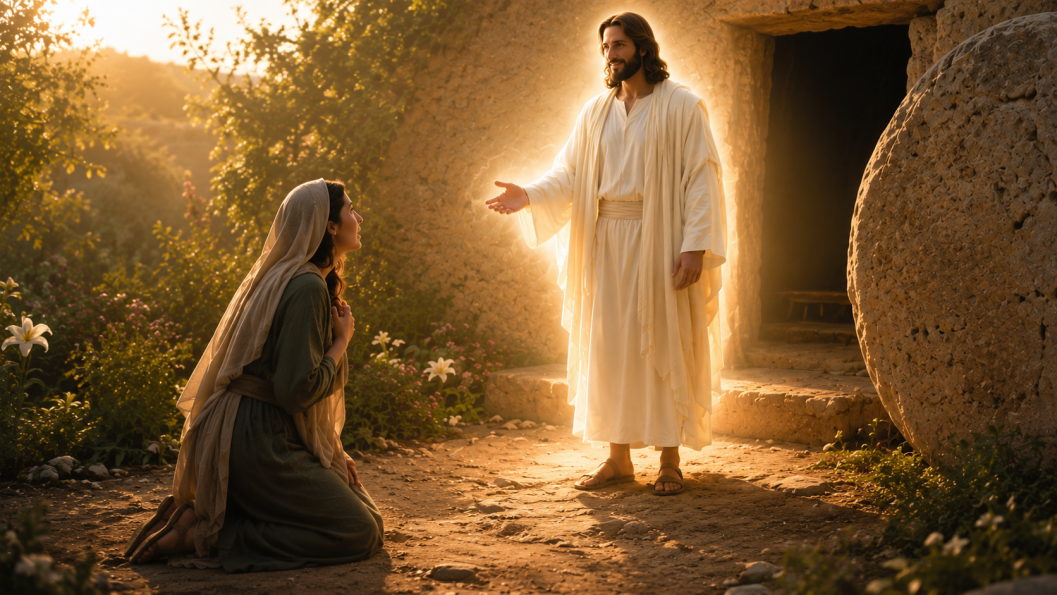
When Mary had finished talking with Peter and John, she returned to the tomb. There she saw two angels where Jesus once was. They told her Jesus was not there. She still wanted to know where His body was. She turned around to see a man standing with her and supposed He must be a gardener, so she asked Him, “Sir, if you have carried him away, tell me where you have put him, and I will get him.”

He spoke her name, “Mary,” and she knew that it was Jesus. She cried out to Him, “Rabboni!” which is a term of respect for a teacher.

She had already encountered the Word of God, and now Mary had encountered her risen Lord personally. He was alive!

That is what happens to us when we are saved. We encounter the Word of God, choose to believe it, and meet the Living Lord.

I don’t know what it was like on the day you were saved, or if that day has happened yet. Some people are overcome with sorrow over their sin and the realization that Jesus went to the cross because of it. Others are overcome with joy because they understand that their sins have been forgiven and removed as far as the east is from the west. Our experiences may be different, but we encounter Jesus personally.

Mary heard Jesus speak her name. Did you know Jesus knows your name?

I think about the old children’s song, “Jesus loves me, this I know.” I have a friend who sometimes signs his emails, “Jesus knows me, this I love.” And it’s true. God knows every one of us, and He loves every one of us.

But Mary wasn’t the only one who encountered Jesus. Later that first day of the week, the disciples were gathered behind closed doors when Jesus appeared in their midst and said, “Peace be unto you.”

They had already heard that He would rise again on the third day. Now they were experiencing it for themselves. They encountered Jesus personally.

Move from Skepticism to Belief
John 20:24-28

Much of the world looks at things as if God is not in the picture. There are influences that can cause us to doubt the things of God, what He can do, and whether miracles can happen.

There may be evidence of a miracle, such as when a doctor finds something concerning in an X-ray, and after prayer, we go back for another X-ray and it is gone. The doctor may say he made a mistake the first time, but we know it was God. That may be the kind of miracle the average person encounters today.

But the disciples saw Jesus walk on water. Peter even stepped out of the boat and onto the water. When he took his eyes off the Lord and lost his faith for a moment, he began to sink. His only hope was the living Lord who was there with him. Jesus reached down and picked him up.

Though we have encountered the living Lord, skepticism may still come our way, and many are reluctant to believe.

Verses 24-28 Now Thomas, called the Twin, one of the twelve, was not with them when Jesus came. The other disciples therefore said to him, “We have seen the Lord.” So he said to them, “Unless I see in His hands the print of the nails, and put my finger into the print of the nails, and put my hand into His side, I will not believe.” And after eight days His disciples were again inside, and Thomas with them. Jesus came, the doors being shut, and stood in the midst, and said, “Peace to you!” Then He said to Thomas, “Reach your finger here, and look at My hands; and reach your hand here, and put it into My side. Do not be unbelieving, but believing.” And Thomas answered and said to Him, “My Lord and my God!“

Have you ever been so ashamed of yourself for failing God that you were in real need of peace? Have you faced turmoil? Aren’t you glad the Word of God comes to remind you that if you confess your sin, He is faithful and just to forgive you and cleanse you from all unrighteousness? There that peace comes once again.

Jesus said, “Peace be unto you.”

I am convinced that Thomas didn’t need to place his hands on Jesus’ side to know it was Him once he saw Him. He knew it was the Lord and cried out, “My Lord and my God!” What a beautiful declaration of faith!

We often refer to him as “Doubting Thomas.” But there was also a believing Thomas. We, too, can go from skepticism to belief.

Belief Leads to Life
John 20:29-31

Jesus said to him, “Thomas, because you have seen Me, you have believed. Blessed are those who have not seen and yet have believed.” And truly Jesus did many other signs in the presence of His disciples, which are not written in this book; but these are written that you may believe that Jesus is the Christ, the Son of God, and that believing you may have life in His name.

It’s only through Christ and trusting in Him that we can have life. I can’t promise you everything will be wonderful all the time, but I do know that life with God is so much better than the alternative.

Richard Wurmbrand endured years of imprisonment and torture for his faith in Christ. While imprisoned, a guard mocked him for praying and asked what he could possibly have to pray about after everything he had suffered.

Wurmbrand replied, “I can pray for you.” And he did. He had a life in Christ that transcended what was happening around him.

Jesus has come that you might have life and have it more abundantly.

One person I knew was close to death, and her loved ones tried to comfort her by telling her she would get better. I heard her say, “I don’t know whether I will or not, but I am so excited to go to Heaven.” Then she turned to me and said, “Isn’t that what you’ve preached about for 50 years?”

Heaven is real, too. If you have encountered the Word of God and the living Lord and have put your faith and trust in Him, you know Him.

That leads to life, life abundantly, and eternal life in Heaven.

Do you have that today? If not, today could be the day.

The Journey That Led to Athens

Acts 17:16-18

Acts 17:19-21

Acts 17:32-34

Matthew 11:28

Introduction

“Now while Paul waited for them at Athens, his spirit was provoked within him when he saw that the city was given over to idols. Therefore he reasoned in the synagogue with the Jews and with the Gentile worshipers, and in the marketplace daily with those who happened to be there. Then certain Epicurean and Stoic philosophers encountered him. Some said, ‘What does this babbler want to say?’ Others said, ‘He seems to be a proclaimer of foreign gods,’ because he preached to them Jesus and the resurrection.” (Acts 17:16–18)

“And they took him and brought him to the Areopagus, saying, ‘May we know what this new doctrine is of which you speak? For you are bringing some strange things to our ears. Therefore, we want to know what these things mean.’ For all the Athenians and the foreigners who were there spent their time in nothing else but either to tell or to hear some new thing.” (Acts 17:19–21)

Before we look at what happened in Athens,  consider the journey that brought Paul there.
It began in Philippi, where Paul and Silas were thrown into prison. At midnight they prayed and sang praises to God, and God miraculously opened the prison doors. The jailer came in, fearing the prisoners had escaped, and was about to take his own life rather than face the Roman authorities. But Paul called out, “Do yourself no harm, for we are all here.”


By the beginning of Acts  17, Paul had traveled to Thessalonica. As was his custom, he first went into the synagogue and preached to the Jewish people. Many believed. Others rejected the message, stirred up the crowd, and recruited troublemakers to form a mob. Paul’s life was in danger; his friends urged him to leave.


From there, Paul traveled to Berea. The Bible says the Bereans were more noble, or fair-minded, than those in Thessalonica. They listened carefully to Paul’s preaching and searched the Scriptures to see whether what he was saying was true. As a result, many believed.


Unfortunately, the opposition from Thessalonica followed Paul to Berea and stirred up another crowd. Once again, Paul’s friends urged him to leave for his own safety. They escorted him to Athens.


That is where we find Paul in this passage.

The Sadness, Idolatry, and Deception

Paul had asked Silas and Timothy to join him as quickly as possible, but they had not arrived yet. While waiting, Paul walked through Athens. The population of Athens was about 10,000 people, yet historians estimate there were around 30,000 idols in the city, three idols for every person.


As Paul walked through Athens and saw that the city was wholly given over to idolatry, it grieved his heart. He came from a very different background, growing up studying the Old Testament under Gamaliel, one of the most respected teachers of the Law in that day. Then everything changed.


Paul met Jesus on the road to Damascus.


Before that encounter, Paul had zealously opposed Christianity. These followers of Jesus seemed to contradict everything he had been taught. But after meeting Christ, Paul returned to the Scriptures and discovered this “new way”, he saw that Jesus was the Messiah promised throughout the Old Testament.


The same zeal Paul once used to oppose Christ became the zeal with which he preached that Jesus is Lord and God had proved it by raising Him from the dead.


But, behind the idolatry in the city was  the deception of Satan.


The King James Version says, **”**Ye men of Athens, I perceive that in all things ye are too superstitious.” Other translations say they were “very religious.” But, religion without God is nothing but superstition!


Paul had met the Savior. He knew there is no other name under Heaven given among men by which we must be saved. None of the names written on those thousands of idols could save anyone. There was only one way to heaven, and that way was Jesus Christ.


There is freedom of religion in the United States. God Himself gives people the freedom to love Him or reject Him. Likewise, our nation gives people the freedom to be Christians, atheists, or followers of other religions.


Sometimes people begin to think it doesn’t matter what you believe as long as you’re sincere. That is a lie from the pit of hell. It does matter what you believe!


The place where Paul spoke was the Areopagus. The Greek god associated with that place was Ares, while the Romans worshiped the same god under the name Mars. That is why it is often called Mars Hill. It was a place where people gathered to debate ideas and discuss philosophy.


Paul warned us to be careful that we are not “cheated through philosophy and empty deceit.” Satan is the father of lies, and one of his greatest tools is deception. He wants people to believe that any path is acceptable or truth doesn’t really matter.


There are many issues in our culture today where people, regardless of political party, fail to line up with God’s Word. This is not a political statement, nor is it an attack on individuals. But when our laws begin to approve what God’s Word says is wrong, we must stand with the Word of God.


Waves of philosophy and empty deceit continue to come against people today. Paul understood that personally because there was a time when he had been deceived, traveling in the wrong direction, sincerely believing he was doing God’s will, until he met Jesus Christ.

The Message That Could Have Brought Salvation

When some certain philosophers heard Paul preaching, they asked, “What is this babbler trying to say?” Others said, “He seems to be proclaiming foreign gods,“ because he was preaching Jesus and the resurrection.


They invited him to the Areopagus.


In one sense, that’s a good thing. People should be willing to listen and examine ideas honestly.
Paul accepted the invitation and began by saying, “I perceive that in every way you are very religious.” As he walked through Athens he  saw their many idols and beliefs. They were religious, but they did not know the true God.


Paul did not begin by attacking them. He began where they were and pointed them to the truth. He told them about the God who made the world and everything in it. This God does not dwell in temples made with hands, nor is He served by human hands as though He needed anything. He is the One who gives life and breath to all things.


The God they needed to know was not another idol among thousands. He was the Creator of all things. The message Paul preached could have brought salvation to every person who was willing to listen, repent, and believe. But sadly, not everyone was willing to hear the truth.

The Message That Did Bring Salvation to a Few

When Paul spoke of the resurrection of the dead they cut him short. When he spoke of the resurrection of the dead, some mocked him, while others said they would hear him again on the matter.

Yet the message did bring salvation to a few.

“When they heard of the resurrection of the dead, some mocked, while others said, ‘We will hear you again on this matter.’ So Paul departed from among them. However, some men joined him and believed, among them Dionysius the Areopagite, a woman named Damaris, and others with them.” (Acts 17:32–34)

Some people might have looked at Paul’s ministry in Athens and thought he had very little success. But God does not measure success the way we do.


The message brought salvation to Dionysius, Damaris, and others who believed. Much depends on the attitude of those who are listening. Will they be like the Bereans, searching the Scriptures to see whether these things are true? Or will they allow prejudice and preconceived ideas to keep them from hearing God’s Word?


For those who believed, the difference was that they listened. They believed the Word of God and came to the one true God through Jesus Christ.


You could have pointed to any of the idols that filled Athens and asked, “Did this god die for you?”


No!


Or ask, “Did this god die and rise again?”

No!


The gospel of Jesus Christ is different.


The good news is that although we have all sinned and come short of the glory of God, Jesus died on the cross for our sins. Because He is the Son of God, His sacrifice was sufficient for every person in every generation. His death was the complete payment for sin.


Yet not everyone is saved because not everyone accepts the gift He offers. Jesus offers salvation freely, but if someone rejects Him, there is nowhere else to turn. With Christ, there is hope. Without Christ, there is no hope.

Will You Reject the Deception of Satan and Accept Christ?

Are you fully trusting Him, or are the philosophies of this world, the pressures of society, and the lies of the enemy pulling you away from God?

The world pulls against us. What we hear in the media, what we see on television, and what our culture celebrates can cause people to question God and doubt His truth.

Friend, there is an answer. There is a way. 

Will you reject the lies of Satan and simply trust Jesus? Will you trust Him completely for your salvation? Have you truly placed your faith in Him?


If you have, praise God. But if you’re not sure you’ve ever really done that, then there is an invitation from Jesus Himself:

“Come unto Me, all you who labor and are heavy laden, and I will give you rest.” (Matthew 11:28)

God’s Instructions for a New Nation

Micah 6:8

He has shown you O man, what is good; 

and what does the Lord require of you

But to do justly,

Love mercy,

And to walk humbly with your God?

God’s Instructions to a New Nation

Micah 6:8 He has shown you, O man, what is good;
And what does the Lord require of you
But to do justly,
To love mercy,
And to walk humbly with your God?

Introduction

“I can’t get in!” said George Duffield, the new Presbyterian pastor in Philadelphia, Pennsylvania. His friends watched him standing at the locked church door and called, “Come over here!” He followed them to the side of the church, where they opened a window and pushed him in. He then opened the doors for them. Duffield faced opposition to his ministry even before the Revolutionary War. His support for independence later caused him more trouble, but he eventually became accepted and preached for more than 50 years.

One of Rob Morgan’s 100 verses that made America is Micah 6:8. John Winthrop referenced this verse in his famous sermon, A City on a Hill. John Adams frequently mentioned it, and George Washington referenced it in his 1783 Circular Letter to the States.

God’s Instructions to a New Nation | Do Justly

At the beginning of the war, the British put a price on George Duffield’s head! He went into hiding to protect his life. British soldiers took possession of his church, turned it into a hospital, and burned the pews to keep their soldiers warm. Still, Duffield continued to be an active military chaplain.

There is an old saying often attributed to Alexis de Tocqueville: “America is great because she is good. If America ceases to be good, America will cease to be great.” The passage of Scripture we are focused on tells us to do justly. One translation puts it like this: “do what is right.”

An old friend of mine, Stan, owned a carpet company with his brother. One time a church made a large carpet purchase from his company. Unfortunately, the carpet didn’t hold up well, and the threads began pulling out. Stan called the manufacturer to make it right, but they would neither replace the carpet nor compensate him.

Stan knew replacing it from his own inventory would cost him a lot of money. Still, he did what was right and replaced all the carpet the church needed at no charge. It seemed Stan lost a lot of money that day, but word got around that his business had integrity and stood behind its product. Who knows how many sales came over the years because he did what was right?

The world tells us to look out for number one. It would tell Stan the defective carpet wasn’t his fault, so why should he lose money? Let the manufacturer deal with it! But the Bible says to do justly. Do what is right.

God’s Instructions to a New Nation | Love Mercy

Stan was also a friend I went to high school with, and he showed that same integrity even back then. We had study hall together. If you’re smart, you’ll get your homework done and study. If you’re like a lot of us, you go in there and mess around.

There were only four of us in the class. One of the coaches was our teacher, and he felt there were better things to do than sit with four students. He told us, “Hey guys, I’m not going to be in here,” and gave us freedom to have fun in the gym. I asked if we could go outside. “Sure,” he said, “as long as you don’t go around the other rooms.” It was going to be a great year. We’d just had freedom handed to us.

One day Stan and another friend, Steve, were playing tag. Steve ran into the gym with Stan chasing him, then held the door shut from the other side. Stan got an idea! Holding the doorknob, he put his foot on the door frame. I heard a cracking noise. The crack went up both sides and across the top. Just like that, the door fell open.

We had torn up the gym door, and we knew it. Steve got as far away as possible. Stan and I thought maybe we could fix it quickly, but the ag teacher walked up. Have you ever done something you know is your fault and wondered what the consequences would be? I wondered if I was going to get kicked out of school. Our parents could have been called in. There could have been a school board meeting.

Instead, the ag teacher, who was known for being a Christian man, looked at the damage and told Stan, “The shop is right over here. Let’s get the hammer and nails.” They came back and fixed the door frame. Justice could have come down on us that day, but he showed mercy. Do justly. But also, love mercy.

An old story is told about a soldier under the great general Napoleon who deserted his army. He was caught and brought back, facing a penalty that could have been death. His mother learned he would appear before Napoleon for judgment and somehow made her way around the guards to plead for her son.

Napoleon told her that her son deserved the justice coming to him and that he wanted to make an example of him. She did not argue his innocence. She fell to her knees and said, “Sir, I do not ask for justice. I ask for mercy.” Napoleon was so touched that he granted mercy and allowed her son to live.

The Bible tells us to do justly, to do what is right. Those words of Scripture were applied to this new nation. We were told America is great because she is good. She does justly because she shows mercy. But if America ever ceases to do good, she will no longer be great.

The world says, “Fight back! Take care of number one.” But Jesus said, “Turn the other cheek.” Hanging on the cross, He looked at those crucifying Him and mercifully said, “Father, forgive them, for they know not what they do.” We can know Christ as our Savior because Jesus is merciful to us. On our behalf He said, “Father, forgive them.”

God’s Instructions to a New Nation | Walk Humbly with Your God

There was a man whose life stretched from the Civil War into WWII. Granny Clampett called the Civil War “the war of northern aggression!” It was a time in America we aren’t proud of, when human slavery was taking place. George Washington Carver was born into slavery during this time. When he grew up, he became an important part of the Tuskegee Institute, one of the early Black colleges in America.

While doing research there, Carver prayed God would give him knowledge of peanut crops. He did all kinds of experiments, and God answered those prayers. He found over 300 uses for peanuts, helping produce a better market for the crop and becoming a well-known man in the United States.

A story is told of Dr. Carver standing in a hotel lobby one day in his everyday clothes. A white traveler walked in, saw him and said, “Hey boy! Get my bags!” Dr. Carver picked up the man’s bags, no questions asked. The hotel proprietor was shocked. “Oh, Dr. Carver! You don’t have to do that. I’ll get someone to take care of it.” The traveler realized his mistake and asked, “Are you Dr. Carver?” Carver simply said, “At your service.”

To walk humbly with our God is our third instruction. The disciples once argued as they walked about which of them would be the greatest. Jesus asked what they were arguing about, and they were ashamed. He used a small child to teach them about greatness in the Kingdom of Heaven and that they must humble themselves and become like children.

In reading the whole passage, we learn what George Washington Carver had learned. Jesus teaches that true greatness is to humbly serve others without thought of reward. Have you ever thought about how Jesus is the Lord of Glory? He was the Lord of Heaven! The Son was in Heaven with the Father and the Spirit, with angels to do His bidding.

Yet He came to earth knowing Judas would betray Him. Jesus was in the garden when Roman soldiers and authorities came to capture Him. When Jesus identified Himself, they drew back and fell to the ground. Still, He willingly allowed them to carry Him off to Pilate.

Here was the Lord of Glory humbling Himself. He became a little lower than the angels, just as the Bible says we all are. He left Heaven’s glory to come to earth and live as humans do. The most powerful being in the universe experienced tiredness and thirst. He was mocked, spit on, and had hairs plucked from His beard. He experienced it all willingly. He came to humbly serve us as a loving Savior.

Conclusion

Jesus is our King. He is The King! He is my King. Oh! He’s such a wonderful King. He is the One who was willing to lay down His power and give His life as a ransom for sin.

You and I owe a debt we cannot pay. He paid that debt in full so that we might be saved. So I ask you, is He your Savior today?

The Blessing of Focus

Matthew 22:34-40

Ephesians 5:18-6:4

Matthew 28:18-20

Focus

At my house, we have a landing at the top of the stairs overlooking our living room. From the landing, you can see the TV. I often head upstairs only to get distracted by the TV. By the time I’m ready to get back to what I was doing, I think, “Was I going upstairs or was I going downstairs?”

Focus is the key to remembering why you headed upstairs.

I’ll encourage you to focus on  five things. To help you remember, we will state them as commands.

Loving God

 Matthew 22:34-40: The Great Commandment

When the Pharisees asked Jesus what the greatest commandment was, Jesus answered, “You shall love the Lord your God with all your heart, with all your soul, and with all your mind.” This is the first and great commandment. “And the second is like it: You shall love your neighbor as yourself.” On these two commandments hang all the Law and the Prophets.

The first command is to LOVE GOD. That is the great commandment.

The Jewish young men and women, as they grew up, learned from Deuteronomy 6:4-5 that they were to love the Lord their God with all their heart, soul, mind, and strength.

The focus was on loving God.

In the Old Testament, the nation did well when they had a good king who loved God. But when they had a king who did not love God, the nation did not fare as well. Eventually, the kingdom split into two nations: the northern kingdom of Israel and the southern kingdom of Judah.

During this time was King Hezekiah. Scripture says he was a good king. He focused on that first commandment to LOVE GOD, and modeled that to his nation.

When Hezekiah died, his son Manasseh did not follow in his father’s footsteps. Instead, he set up idols throughout the land where pagan and ungodly worship of false gods took place. One of those false gods was called Molech. They had a large statue that they would heat until it turned red from the fire, and they would sacrifice their children by laying them on that statue. These practices were promoted by evil kings, causing the nation to decline. Judgment was coming.

Babylon captured Manasseh, put him in chains, and carried him away. While he was in captivity, he came to his senses. He realized, “I have not been worshiping God. I have not focused on loving God, the true God, the God of my father.”

He cried out to God. He sincerely repented of his sin. God heard his prayers. He was restored as king of Judah and lived the rest of his life with God’s blessing because he returned his focus to God.

So, our first command is to LOVE GOD.

Loving Others

The commandment second to the greatest one is to love your neighbor as yourself. Jesus quoted that, and someone asked Him, “Who is my neighbor?” He was looking for a way to avoid loving everybody, perhaps because some people are hard to love.

Jesus answered by telling the story of a man who was attacked by robbers. They robbed him, beat him so badly that he could not move himself, and left him without the means to care for himself. As he lay there, people came by. Some stayed on the other side of the road, some crossed to the opposite side to avoid him. One was a priest, another a Levite.

One was a Samaritan.

The Jews despised the Samaritans, yet Jesus said the Samaritan had compassion on the wounded man. He went to him, cared for his wounds, took him to an inn, and said, “Take care of him, and when I come back, I will settle up with you.”

Then Jesus asked, “Which one was a neighbor to the man who was robbed?”

It was the despised Samaritan.

These are your commands:

  1. LOVE GOD
  2. LOVE OTHERS

Loving the Church

Ephesians 5:18-6:4 teaches us what it looks like to live under the influence of the Spirit. Paul explains the importance of submitting to one another, loving our families, and living according to God’s design. He reminds husbands to love their wives as Christ loved the church and gave Himself for her.

Think of how Jesus demonstrated that love in John 17 when He prayed for the church. He prayed for His disciples, and He prayed for those who would come after them. He was praying for you and me as well.

A man named Brian said, “When my love for the church mirrors Christ’s love for the church, things will go well.”

Brian said Jesus was optimistic because He looked at these disciples and believed these flaky men would change the world. When Jesus was crucified, they all ran away and hid. Yet after He was gone, Jesus was depending on those same disciples to establish the church and care for it. He knew they would.

Remain committed to the gospel. This is the good news of Jesus!

A seminar I attended mentioned that each one of us should be doing whatever we can to share Christ. We were challenged to come up with a fifteen-second testimony. I want to extend this challenge to you.

If you’re saved, think of what your life was like before Christ and what it is like after. Try to find a way to tell those two things in 15 seconds.

My 15-second testimony would be: Before I came to Christ, I didn’t think anybody could know for sure they would go to heaven. They couldn’t know it until they died. After I met Christ, I found out you can be sure and I’m on my way to heaven. In fact, the Bible tells us over and over that we can be sure.

Do you have a story like that? As you go through life, there will be opportunities to take the conversation in a spiritual direction. Sometimes all it takes is asking someone, “Could I tell you a short story about my own life?”

Remember, their salvation doesn’t depend on you. You simply share the good news that Jesus Christ died on the cross to pay the penalty for sin.

That’s the gospel.

Whenever my love for the church mirrors Christ’s love for the church, I actively pursue peace and unity. When my love for the church mirrors Christ’s love for the church, I seek God’s glory and not my own.

These are your commands:

  1. LOVE GOD
  2. LOVE OTHERS
  3. LOVE YOUR CHURCH

Loving Your Family

I know a family that was a great example to others. The husband was a pastor, with a faithful wife, and they were raising their children in the nurture and admonition of the Lord. Both sons eventually accepted the call to preach. To the shock of his family and those who had sat under his ministry, the pastor became involved with another woman, and the marriage ended in divorce.

If you identify with the husband in this story and have come to Christ in repentance, you have been forgiven. You can focus on your family where you are right now.

This story reminds us why we must focus on our families. Our choices do not only affect us. They can have far-reaching effects on those we love and those who look to us for guidance.

These are your commandments:

  1. LOVE GOD
  2. LOVE OTHERS
  3. LOVE YOUR CHURCH
  4. LOVE YOUR FAMILY

Fulfilling Your Mission

Matthew 28:18-20

 And Jesus came and spoke to them, saying, “All authority has been given to Me in heaven and on earth. Go therefore and make disciples of all the nations, baptizing them in the name of the Father and of the Son and of the Holy Spirit, teaching them to observe all things that I have commanded you; and lo, I am with you always, even to the end of the age.” Amen.

This is The Great Commission.

As we live out our lives, we are to announce the gospel to every people group in the world.

Some of us cannot physically go out to do that. We can support others who do, however. Our church supports several missionaries on a regular basis. They usually let us know how we can support them.

Sometimes we focus on “going into all the world” as a command to go somewhere, but as we are going through life, we share the gospel with others in our everyday lives.

This is accomplished in these commands:

  1. LOVE GOD
  2. LOVE OTHERS
  3. LOVE YOUR CHURCH
  4. LOVE YOUR FAMIL
  5. FULFILL YOUR MISSION

Keep thinking about that 15-second testimony and share it with someone this week.

Victory in Jesus

Troubles come to each of us. But with Jesus, you can have victory over the trials and tribulations in your life.

Troubles From Without

King David and his men were hiding in a cave when they heard King Saul’s army approaching. Saul was deeply jealous of David. After David won a great victory, the people sang, “Saul has slain his thousands, and David his ten thousands.” Saul took that as a slight, grew jealous, and threw spears at David on a couple of occasions, forcing David to flee for his life.

While 600 of David’s men waited silently in the cave, Saul walked inside alone to relieve himself. One of David’s men whispered, “Your enemy is here. You can get him now.” But David replied, “I will not touch the Lord’s anointed.” Instead, he secretly cut off a piece of Saul’s robe.

After Saul left and was a safe distance away, David called out from the entrance, holding up the piece of garment: “Why are you chasing me? Don’t you understand that I don’t want to kill you? I had my chance just a few minutes ago.”

Saul, who struggled with jealousy and periods of mental instability, had a lucid moment. He said, “David, my son, you have been more righteous than I because you spared my life.”

Yet David still faced troubles from without. After returning home, Saul began to dwell on what happened, letting it fester. He thought, “I should have attacked him. I had thousands of men, and he only had 600.” When he heard where David was, Saul set out with his army once again.

That night, David and his man Abishai slipped into Saul’s camp under the cover of darkness. They found the army asleep in a protective ring around King Saul, his spear stuck in the ground by his head. Abishai said, “Here’s your chance again. God has delivered your enemy into your hands.” But David answered, “No. I will not do it. He is still the Lord’s anointed.”

David took Saul’s spear and water jug and slipped away. At daybreak, David called out from a nearby hillside, “King Saul! I could have killed you today. Send someone up here to get your spear and your water jug.”

Once again, God delivered David. Knowing Saul would likely try again, David prayed:

“Be pleased, O Lord, to deliver me;

O Lord, make haste to help me!

Let them be ashamed and brought to mutual confusion who seek to destroy my life…

Let those who love Your salvation continually say, ‘The Lord be glorified.’”

— Psalm 40:13–15

We can experience trouble from without in our own lives: at work, through jealousy, or when issues aren’t worked through and people become enemies. The hardest trouble to handle comes from people who misunderstand you and believe you’re trying to harm them when you’re not.

Troubles From Within

Then there is the struggle from within:

“For innumerable evils have surrounded me;

My iniquities have overtaken me, so that I am not able to look up;

They are more than the hairs of my head…”

— Psalm 40:12

Many times, the problems we face are of our own making. We have all sinned and come short of the glory of God, and we know that the wages of sin is death. That inner struggle is the pull of sin within our lives, and sin must be forgiven and dealt with.

Paul describes this same struggle in Romans 7. He notes that there are things he knows he ought to do that he doesn’t do, and things he shouldn’t do that he finds himself doing. He asks, “Who shall deliver me from this body of sin and death?” Then he answers, “I thank God through Jesus Christ our Lord.”

David viewed his own iniquities as too many to count, yet earlier in the Psalm he said, “It is written in the book; I have come to do Your will.” He came to the Lord. That’s the answer for us, too.

Mark Twain once said, “There are many things in the Bible that are hard to understand. My problem is not with the things I don’t understand, but with the things I do understand.”

The Serenity Prayer speaks to this as well: “Lord, help me to accept the things I cannot change” (troubles from without), “give me the courage to change the things I can” (struggles from within), and “give me the wisdom to know the difference.”

Victory in Jesus

In the opening verses of Psalm 40, David writes of experiencing joy and salvation:

“I waited patiently for the Lord;

And He inclined to me, and heard my cry.

He also brought me up out of a horrible pit,

Out of the miry clay,

And set my feet upon a rock, and established my steps.”

— Psalm 40:1–2

David described being down in a horrible pit of miry clay. That clay is slick and slippery; if you try to move, you’re in danger of falling, or your feet become stuck.

Sometimes we get stuck in our lives, whether in dealing with other people or dealing with ourselves. Other times, we are walking on slippery places where our faith slips and slides. But God brings us up out of that miry clay and sets our feet firmly upon a rock. Through every struggle, we can have victory through Jesus Christ.

Tell Others About That Victory

When God delivers us and gives us victory over troubles without and struggles within, our response should be to praise Him and share it:

“He has put a new song in my mouth:

Praise to our God;

Many will see it and fear, and will trust in the Lord.”

— Psalm 40:3

David said, “I have proclaimed Your righteousness in the great congregation.” When we receive that victory, we ought to go out and tell others about the brand-new life we have in Him.

The Absolute Necessity – Version 2

Greetings!

For the past few years, I have been the interim pastor for Ezra Chruch of God. It was a very rewarding and blessed time for me.

I have moved on from Ezra and this past Sunday and next Sunday I will be preaching at a different church.

Due to that, this is sort of a “repeat” of a sermon I preached at Ezra back in December of 2022. You can find the blog post for that sermon here

Below you’ll find the video from April 16, 2023

April 16, 2023 sermon video

God bless you! Have a wonderful day.

When God Came Near

When God came to earth.

Max Lucado wrote a book called “God Came Near.”  I haven’t read it but the title always intrigued me, so I will borrow it for today’s post.  I’m thinking about the time that God became man to save the world.

A group called 4Him sings the song “A Strange Way to Save the World.” 

I’m sure he must have been surprised
At where this road had taken him
‘Cause never in a million lives
Would he have dreamed of Bethlehem
And standing at the manger
He saw with his own eyes
The message from the angel come alive
And Joseph said
Why me, I’m just a simple man of trade
Why Him, with all the rulers in the world
Why here, inside this stable filled with hay
Why her, she’s just an ordinary girl
Now I’m not one to second guess
What angels have to say
But this is such a strange way to save the world
To think of how it could have been
If Jesus had come as He deserved
There would have been no Bethlehem
No lowly shepherds at His birth
But Joseph knew the reason
Love had to reach so far
And as he held the Savior in his arms
He must have thought
Why me, I’m just a simple man of trade
Why Him, with all the rulers in the world
Why here, inside this stable filled with hay
Why her, she’s just an ordinary girl
Now I’m not one to second guess
What angels have to say
But this is such a strange way to save the world

Joseph

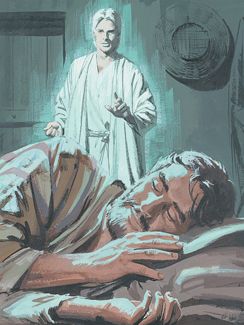
In Matthew chapter one, we read that Joseph had learned of Mary’s pregnancy.  They were not yet married but were engaged. In those days, that was as good as a marriage contract.  He knew that he was not the child’s father. Because he was a just man, he planned to “put her away” (divorce) her privately.  Then an angel appeared to him.

Gabriel the angel came to Joseph in a dream.

Matthew 1: 18-25 (MEV)

18 Now the birth of Jesus Christ happened this way: After His mother Mary was engaged to Joseph, before they came together, she was found with child by the Holy Spirit. 19 Then Joseph her husband, being a just man and not willing to make her a public example, had in mind to divorce her privately. 20 But while he thought on these things, the angel of the Lord appeared to him in a dream saying, “Joseph, son of David, do not be afraid to take Mary as your wife, for He who is conceived in her is of the Holy Spirit. 21 She will bear a Son, and you shall call His name JESUS, for He will save His people from their sins.” 22 Now all this occurred to fulfill what the Lord had spoken through the prophet, saying, 23 “A virgin shall be with child, and will bear a Son, and they shall call His name Immanuel,” which is interpreted, “God with us.” 24 Then Joseph, being awakened from sleep, did as the angel of the Lord had commanded him, and remained with his wife, 25 and did not know her until she had given birth to her firstborn Son. And he called His name JESUS.

Why?

God became man.  Why?
I want to look at some reasons why He did.

The first was to fulfill prophesy.
The second was to show what God is like.
The third was to communicate with us.
The fourth was to identify with us in our struggles. 
Finally, to be the Lamb of God.

Fulfilling Prophesy

The passage above mentions one of those prophesies. Isaiah 7:14
14 Therefore the Lord Himself shall give you a sign: The virgin shall conceive, and bear a son, and shall call his name Immanuel

That is exactly what took place.  That’s what Christmas is all about. The baby in the manger, born of a virgin, is that prophecy being fulfilled.

Jesus was born in Bethlehem, just as Micah had prophesied.

Micah prophesied that Jesus would be born in Bethlehem. (Micah 5:2)

There are about 300 other prophecies that proclaimed that God was going to become man.  They were all fulfilled with the birth of Jesus Christ. 

King David was told that his descendants would be on the throne forever. (2 Samuel 7:12-16, Isaiah 11:1, Jeremiah 23:5-6)

You may wonder who is on the throne today. You can research the genealogy of David down to the time of Jesus. (Matthew 1:2-16, Luke 3:23-38)

Jesus is the king.  We don’t need anybody beyond that.  He’s still the king and will be forever, sitting at the right hand of God. 

Hebrews 1:8-9 

8 But to the Son He says: “Your throne, O God, lasts forever and ever; a scepter of righteousness is the scepter of Your kingdom. 9 You have loved righteousness and hated wickedness, therefore God, Your God, has anointed You with the oil of gladness more than Your companions.”

It was prophesied that King David’s descendants would be on the throne forever.  Jesus, through both Mary and Joseph, is the fulfillment of that prophecy.

What God is Like

Jesus was born to show the world what God is like.

Bing Crosby played a character named Hank Martin in a movie made in 1949 called “A Connecticut Yankee in King Arthur’s Court” which was based on a book written by Mark Twain. 

The main character was somehow transported back in time to the medieval times of King Arthur. He was in trouble because he was dressed in clothing from another century and he thought he needed to do something spectacular to avoid being arrested.

Because people of that time believed in magic and sorcery, the character took his magnifying glass and concentrated the sun’s rays on a piece of paper and burst into flames.  The king believed it was magic. 

They looked at him differently then, and he was in the king’s good graces for a time. 

Later, Hank challenged the king, saying he didn’t know his subjects as well as he thought.  The pair began traveling around the country in disguise. 

The people didn't realize the king was among them.
The people didn’t realize the king was among them.

On their travels, they overheard complaints about the king.  Arthur wasn’t used to that and almost stuck the speaker before Hank reminded him that he wasn’t “the king” right then.

Farther along, they heard some positive comments about the king, and that pleased Arthur. 

 The king was in their midst, but they didn’t know it. 

Jesus came to the earth and the King was present but many people didn’t realize it until after the resurrection. 

Undercover Boss

You may have seen the show “Undercover Boss.”  The owner of the company will go undercover and work as a regular employee and see how the actual employees perform.  Sometimes they complain about the owner, but other times they are very diligent and hard-working. 

Then near the end of the episode, the employees will hear that the owner is coming for a visit. They’re all sitting in a room and in walks the owner.

Some employees are nervous when they realize the things they said and to whom they were said. Others are just happy to see their coworker again and learn that he or she is the boss.  

Sometimes the troublemakers get fired, other times, the boss gives them another chance or more training 

Jesus came to show us what God is like. 

John 14:8-11

8 Philip said to Him, “Lord, show us the Father, and that is sufficient for us.”9 Jesus said to him, “Have I been with you such a long time, and yet you have not known Me, Philip? He who has seen Me has seen the Father. So how can you say, ‘Show us the Father’? 10 Do you not believe that I am in the Father and the Father is in Me? The words that I say to you I do not speak on My own authority. But the Father who lives in Me does the works. 11 Believe Me that I am in the Father, and the Father is in Me. Or else believe Me on account of the works themselves.

If you’ve seen Jesus, you’ve seen the Father. 

Communication with the World

Hebrews 1: 1-2


God, who at various times and in diverse ways spoke long ago to the fathers through the prophets, 2 has in these last days spoken to us by His Son, whom He has appointed heir of all things, and through whom He made the world.

In the Old Testament, God spoke through the prophets. In the days of the New Testament, God spoke to them, and us, through Jesus Christ His Son.  

Paul Harvey once told the story of a man whose wife and children asked if he was attending church with them since it was Christmas. 

The man declined. He usually just left it at a simple no, but he elaborated on his refusal this time.  

“All this stuff about God becoming man, I just don’t quite get that.”

His family left to go to church and the man was sitting in his living room looking out the window.  As he gazed outside, it began to snow.  He saw some birds on the ground that appeared to be shivering from the cold.  

They didn't understand he was trying to help.
They didn’t understand he was trying to help.

He went out to his shed, turned on the heater, and left the door open so the birds could go inside and be warmed. 

He waited for the birds to go in, but they didn’t.  He attempted to approach them but when he got close, they flitted away. 

There was food on the ground so they didn’t go far, but they eluded him. 

He tried to get near them again, but they flew away again. 

He began talking to them, “I’m not going to hurt you. I’m just trying to help you.” He realized they didn’t understand what he was saying.  How can I communicate with them? If only I were a bird.”

Then it hit him. 

That’s why God came to this earth: So He could communicate with us. 

Identify with the Struggles of the World

Another reason, I believe, that He came, is to identify with our struggles. 

Hebrews 4: 14-16

14 Since then we have a great High Priest who has passed into the heavens, Jesus the Son of God, let us hold firmly to our confession. 15 For we do not have a High Priest who cannot sympathize with our weaknesses, but One who was in every sense tempted like we are, yet without sin. 16 Let us then come with confidence to the throne of grace, that we may obtain mercy and find grace to help in time of need.

He came to this earth to be able to identify with our struggles. 

You may feel that God is so distant and doesn’t know what it’s like for you.  But Jesus knows.  He came and showed us that He knew what it’s like.  

The story of the woman at the well shows His humanness. John 4:6 says He was “exhausted.”  He knows what it’s like to be tired. He knew what it was like to be thirsty. (John 4:7-8, John 19:28)  

Jesus knows the struggles the people of the world face.

He knows what it’s like to be rejected. He knows what it’s like to have physical pain. He knew what it was like to have to restrain His power.  He could have called thousands of angels to deliver him in the Garden of Gethsemane, but He chose not to. 

Lamb of God to Save the World

John 1:26-29

26 John (the Baptist) answered them, “I baptize with water, but One stands among you, whom you do not know. 27 This is He who comes after me, who is preferred before me, the strap of whose sandal I am not worthy to untie.” 28 These things took place in Bethany beyond the Jordan, where John was baptizing. 29 The next day John saw Jesus coming toward him and said, “Look, the Lamb of God, who takes away the sin of the world.

Jesus came to the earth to be the Lamb of God; a sacrifice for our sins. 

Jesus became the sacrificial lamb for the world.

The Bible tells us that we have all sinned. (Romans 3:23)  We’re all in the same boat. Some of us have what the world would consider “bigger” sins, but they’re all the same in God’s eyes. We have all sinned and come far short of God’s glory. 

The Bible also tells us that the wages of sin is death. (Romans 6:23) That’s the bad news. 

Each time you attend a funeral, you’re dealing with physical death The soul has separated from the body. Life has moved out and left behind is the shell. 

There’s another kind of death called spiritual death.  That’s when the soul is separated from God. 

All have sinned and come short of the glory of God and the wages of sin is death. 

We all have a death sentence on our heads. 

But Jesus came, as John the Baptist pointed out, to be the Lamb of God.  

His listeners knew the significance of the lamb because year after year there had been sacrifices of an unblemished lamb to atone for their sins. 

God sent His Son to the earth to be the ultimate sacrifice: the Lamb of God. 

Revelation 20:14-15

14 Then Death and Hades were cast into the lake of fire. This is the second death. 15 Anyone whose name was not found written in the Book of Life was cast into the lake of fire.

While everyone faces physical death, you don’t have to experience the second death. 

Jesus came to be the Lamb of God and shed His blood as a sacrifice for our sins.  He made it possible for everyone to be saved!  That’s why He came. 

Bringing Redemption to the World

That’s why God became man. 

Why would Jesus leave Heaven, where they would do His bidding, and come to this earth to be rejected (Isaiah 53;3) and crucified?

Jesus was fully God but also fully man.

Many men have died, but none could take our place.

The divine son of God became human and physically died. But because of His deity, His death covers the sins of the world. 

Jesus' death on the cross covered the sin of the world.
Jesus’ death on the cross covered the sin of the world.

That’s why you and I can be saved.  He made it possible. 

If you believe in your heart that God raised Him from the dead, you will be saved. (Romans 10:9)

We strongly, fully believe that Jesus died, rose again, the tomb was empty, and He was seen alive more than once after He was dead. It’s not a fairy tale. 

Because He lives, we have the hope that we will live forever.

If you believe in your heart, you are very close. Romans 10:9 also says you need to confess with your mouth that He is Lord.  

Have you done that?  Do you know that you know that Jesus is your Lord?

If you don’t, today is the day.  The Bible says today is the day of salvation (2 Corinthians 6:2)

Accept Him today.